I wrote about the movie Blood Diamond several months ago and was fairly critical of the concept behind the movie. Well I finally got around to seeing the movie today.
What I said before holds true. The buzz surrounding the movie, the lessons drawn from it, and the underlying intended purpose of it are misleading. The idea that war in Africa is a result of our indulgence is ridiculous. And the idea that if we didn't buy diamonds...or gold or oil for that matter...from Africa, the wars would go away is even more so.
That said, I enjoyed the movie. Suprisingly the blood diamond theme was relatively subdued save for a few highly charged dialogue scenes. It is a story of evil and redemption. It does portray war in Africa in a manner which, to my understanding, is accurate. War in much of Africa is a horrible, horrible thing (though I suppose the modifier "in Africa" isn't neccessary) that tears the social fabric apart and is tremendously destructive. Massacres of entire villages are not uncommon, children are abducted and transformed into monsters, taught to destroy and kill and even deny their own parents. Refugee camps overflow. Government forces are often no better than rebel forces.
And the fire of war is fed, not by ideas...freedom, nation, oppression, exploitation...but by the personal gain acheived by the leaders of the war. When war is conducted in this way there is no incentive for peace. The oppressed, the poor, the good, are displaced or killed, and the rich, powerful, and evil are left to suck the life out of society for their own personal gain.
The plot of the movie is also engrossing. It is led by Leonardo Dicaprio who, in my opinion, does an excellent job. The transformation and redemption of his character is painfully slow, and advances two steps forward, one back. But it is completed and in the end, as in any good story there is a degree of justice served.
All in all it was an enjoyable movie. A warning though...it is a tremendously violent movie with some incredibly disturbing scenes including but not limited to impromtu amputation, village massacres, the indoctrination of children and their subsequent vicious behavior, lots of death, the sack of a city, and several firefights.
Tuesday, July 03, 2007


On June
June was officially my most prolific month ever--16 posts.
It followed May, during which I posted exactly once.
It followed May, during which I posted exactly once.
The Trip: Cordoba Part 3
The mosque is the main attraction of Cordoba. Beyond that there is not a whole lot worth seeing. There is a crumbled Roman Temple, and a relatively interesting Castle. The castle was built by the Reyes Catolicos Fernando and Isabela (Ferdinand and Isabel) when they were conducting their campaign against the Moors in Granada. It later became a center of the Inquisition in the south for a few hundred years, then a prison. It has some beautiful gardens and you can climb up in the towers.
There are also a few museums dedicated to the Jews and their history in the city. They made it a center of learning in the 10-11th centuries. Incidentally noone guessed Maimonides as the Jewish Doctor/Philosopher I mentioned in an earlier post. His epiteph reads "From Moshe (Moses) to Moshe (Maimonides) there is no one like Moshe." He had to flee Cordoba when an intolerant group of Muslims came to power and eventually landed in Egypt where he was renowned as the greatest physician of his time (at a time when Arab physicians were the best in the world). He was also perhaps the greatest Jewish philosopher.
The highlight of Cordoba, outside the Mosque was the riverwalk. We say the statue of a man bathing in the river. I wonder what happens if there is a droght.
and got a great view of the city at sunset. The building in the center is the mosque with the cathedral rising out of it. To the right is the bell tower, within which is the old minaret. It is a beautiful city, go if you get the chance.

There are also a few museums dedicated to the Jews and their history in the city. They made it a center of learning in the 10-11th centuries. Incidentally noone guessed Maimonides as the Jewish Doctor/Philosopher I mentioned in an earlier post. His epiteph reads "From Moshe (Moses) to Moshe (Maimonides) there is no one like Moshe." He had to flee Cordoba when an intolerant group of Muslims came to power and eventually landed in Egypt where he was renowned as the greatest physician of his time (at a time when Arab physicians were the best in the world). He was also perhaps the greatest Jewish philosopher.

The highlight of Cordoba, outside the Mosque was the riverwalk. We say the statue of a man bathing in the river. I wonder what happens if there is a droght.

and got a great view of the city at sunset. The building in the center is the mosque with the cathedral rising out of it. To the right is the bell tower, within which is the old minaret. It is a beautiful city, go if you get the chance.

Monday, July 02, 2007
The Trip: Day 18 Part 2
Bullfighting is an old tradition in Spain. It was passed on to much of Latin America, and is even practiced in parts of France (or so I'm told). It began as a way to prolong the festivities surrounding the killing of a bull and the party that followed.
The first bull fighting ring was built in the mid-18th century in Seville.

From there it spread. Every step in a bullfight is ridgidly controlled and dictated by tradition. It is often likened to a dance, an alaborate ritual that will lead to the death of one or the other of the contestants. Each step is announced by the band and controlled by the president of the bullfight.
The first players are the Picadors. These are men on horseback with long pikes. When the bull charges the horse they stick it to make it bleed and thus weaken the bull. Before they added the protective covering many horses were killed by the bulls.

Next come the banderilleros. These in my opinion are the craziest of the bullfighters. They run right at the bull, jump up to reach over the horns and stick these colorful sticks into the bull's shoulder. This is to add to the show, and to make the bull mad.
Then it is the turn of the matador. He is the star of the show. There are three per bullfight and each fights two bulls. The most famous are household names throughout Spain. They guide the bull with their red cape. They display their bravery in two ways, by guiding the bull ever closer to them, and by moving their feet as little as possible. As they guide the bull the crowd gets more and more into it. There is a fine line however, because if the matador plays with the bull too much the bull may tire and not be a worthy adversary when it comes time to kill it.

The last step is the killing of the bull. The goal of the matador is to drive the sword into the heart. If done correctly it takes no more than a few seconds for the bull to die. Occasionally they miss the heart. This results in a failed bullfight and dishonor. Generally though the thrust is successful.
After the fight it is up to the President of the bullfight to decide if the matador deserves a trophy. To earn a trophy the matador must have fought well and put on a good show. The audience participates in theis process by indicating that they enjoyed the performance by waving wight flags. When we went one matador earned a trophy. The trophies that they earn come from the bull. A good bullfighter earns an ear...a great bullfightes earns two ears, and the best earn two ears and the tail.

All in all we had a great time at the bullfight. I have wanted to go for a long time. I enjoy tradition and ceremony.
The first bull fighting ring was built in the mid-18th century in Seville.

From there it spread. Every step in a bullfight is ridgidly controlled and dictated by tradition. It is often likened to a dance, an alaborate ritual that will lead to the death of one or the other of the contestants. Each step is announced by the band and controlled by the president of the bullfight.
The first players are the Picadors. These are men on horseback with long pikes. When the bull charges the horse they stick it to make it bleed and thus weaken the bull. Before they added the protective covering many horses were killed by the bulls.

Next come the banderilleros. These in my opinion are the craziest of the bullfighters. They run right at the bull, jump up to reach over the horns and stick these colorful sticks into the bull's shoulder. This is to add to the show, and to make the bull mad.

Then it is the turn of the matador. He is the star of the show. There are three per bullfight and each fights two bulls. The most famous are household names throughout Spain. They guide the bull with their red cape. They display their bravery in two ways, by guiding the bull ever closer to them, and by moving their feet as little as possible.
 As they guide the bull the crowd gets more and more into it. There is a fine line however, because if the matador plays with the bull too much the bull may tire and not be a worthy adversary when it comes time to kill it.

The last step is the killing of the bull. The goal of the matador is to drive the sword into the heart. If done correctly it takes no more than a few seconds for the bull to die.
 Occasionally they miss the heart. This results in a failed bullfight and dishonor. Generally though the thrust is successful.
After the fight it is up to the President of the bullfight to decide if the matador deserves a trophy. To earn a trophy the matador must have fought well and put on a good show. The audience participates in theis process by indicating that they enjoyed the performance by waving wight flags. When we went one matador earned a trophy. The trophies that they earn come from the bull. A good bullfighter earns an ear...a great bullfightes earns two ears, and the best earn two ears and the tail.

All in all we had a great time at the bullfight. I have wanted to go for a long time. I enjoy tradition and ceremony.
The Move: Day 3
As anyone who is likely to read this blog knows, Adrienne and I are moving to Michigan next Monday, July 9. It is a difficult process packing up the house. There are so many memories tied up in it. I sometimes find my memory triggered by some random thing I am packing up and I am carried down memory lane. We have lived here for two years now--our entire married life.
It is hard too because we didn't expect it to be this way.
The house is a wreck right now. It's a good thing nobody is coming to look at the house. There are boxes everywhere and our things are strewn about the house.
Most of the packing is done. When you start packing for a move the boxes all have order. They contain a certain class of things and are all neatly labeled--"books-fiction-A-F", "Things from David's desk", "Pots and Pans". As you progress the labels become increasingly vague and tend to be labeled by room--"Leftover books", "Random office stuff". By the end they lose all coherence and labels become irrelevant--"Sort it out when you get there", "Stuff I couldn't fit in other boxes".
Friday, June 29, 2007
The Trip: Day 20...and 21....and 22....and 23
We left Spain a little after 11 o'clock in the morning on Tuesday. Our plan was to arrive in Phoenix about 20 hours later at 10 PM and then drive down to Tucson.
The flight to Miami went well, but then things began to go wrong. I reported a passport lost a few years ago, and so when we showed up at the port of entry they shuttled us off into the little special room to await special questioning. They asked us all sorts of questions and generally pestered us. Of course my passport does have stamps from Cuba, Lebanon, Syria, Egypt and Jordan...and it turned out to be an invalid passport. Inadvertantly I must have found the passport I lost and lost the new one I got and never realized the switch had been made (if you are familiar with my filing methods you won't be suprised). So they were a little suspiscious and kept us there for hours making us stand on nails, and dripping water on our heads, and giving us deep-muscle massages the old-fasioned way...actually no that's a lie, they just punched a hole in y passport and sent us on our way. They didn't even ask for another form of identification...no wonder terrorists have no problem getting into this country, though I guess my wife was a little scantily clad for the wife of a fundamentalist muslim...but it could all be a big hoax to fool the Great Satan.
Sorry I'm Rambling
So we continued on to New Orleans, where we were promptly told that our flight to Dallas was cancelled and we would have to wait in line to schedule another one. Two hours later we had a flight scheduled for the next day, but no place to stay, no vouchers for food, or accomodations...in short nothing that a reasonable company would offer. As we sat inline we watched the other airlines' flights to Dallas take off despite the weather.
We found a halfway decent place to stay, walked to Sonic for dinner, and bedded down for the night. The interesting thing about New Orleans is that no one makes any sense. They never tell you this when you see news reports...they all manage to find the one person in the city who can speak English. Most speak, Spanish, or French, or Creole, or English that is so mangled that I am confident most linguists would classify it as a different language.
We got to the airport the next day and waited for 6 hours as our flight was delayed, and delayed, and delayed...then we got up in the air, circled over Dallas for two hours, diverted to Austin, then halfway there, turned around and came back to Dallas where, upon landing we were informed that our flight to Phoenix had been cancelled. Again, no offers of explanations, or assistance, only the long wait for a new flight. Two hours later we had a flight scheduled for Friday afternoon and were comfortably ensconed in the Radisson. Thursday, we hung out all day, went down to the mall, hung out in Barnes and Noble, ate in the food court and watched Ocean's Thirteen...like the other two it was a humorous, and entertaining movie careful not to stray from the light side of life...and then returned to the hotel. In an interesting contrast the hotel shuttle was 15 minutes late picking us up at the mall so they offered us free dinner. I recommend the Radisson. We went swimming, ate dinner and turned in for an early night.
Today we got to the airport and got on the airplane with out a hitch and the pilot came on the intercom to say that there was a problem with the tire and a maintenance guy was going to come check it out. 30 minutes later the guy arrived checked the tire and gave us the ok to take off...it seems like in the world of modern aviation you would be able to get someone to the plane in less than thirty minutes...I mean there's a maintenence guy attatched to that gate or small group of gates.
Now we're here.
Moral of the Story: 1. No Passport, no problem...this is the United States
2. Never fly American Airlines
Monday, June 25, 2007
The Trip: Cordoba Part 2
Cordoba was an ancient Roman city, but the height of its glory came under the Muslims. It became the seat of the Umayyid caliphate after they were kicked out of Damascus in the 800´s by the Abbasids. In the 900´s it was the biggest city in Europe other than Constantinople. It was a place of vibrant artistic, architectual and intellectual activity. One of the people who makes my top ten smartest people in history list was born there during this period. If you can guess who it was I´ll give you a dollar.
The crown jewel of this period is the mezquita (Spanish for mosque, not mosquito). It is a classic example of the simple elegance in architecture practiced by early Muslims. You walk into the patio del los naranjos, a courtyard dotted with the orange tree native to Southern Spain (yes its name is naranjo, not naranja) laid out in a grid like pattern, watered by an interconected series of small ditches in the pavement that are in turn fed by the fountain in the middle.
The interior of the mosque itself is supported by hundreds of pillars (at one point there were more than 1200) that support a series of arches. Each arch is made of alternating red and white stone. It gives the impression of walking into a forest. The lighting is ingeniously done so that it comes through windows and lights up certain areas
The mihrab is perhaps the most elaborate I have seen, with a horsesho arch and a dome going up above it. And the ceilings are made of carved wooden beams.
When the Christians conquered the city in the 13th century they used it as a church, but did little to change the interior. In the 16th century though, with gold from the new world flowing through Spain, they ripped out the center of the mosque and installed a cathedral replete with soaring gothic arches, gold altarpiece and elaborately carved walnut choir stalls.
Most of the old mosque remains, but the giant Spanish cathedral in the middle destroys much of the simple elegance of the original design.
The Trip: Day 18 Part 1
El Escorial is a palace/monastary built by Phillip II because he promised it to God in return for victory. It is just outside Madrid on our side of town, so we went to see it on Sunday morning. The funny thing about churches in Europe is they hardly ever have services, even on Sundays some of them are open for visits.
The palace part of the monastary was added to house Phillip´s rather extensive art collection. He had more than 1100 paintings there at one point. Some of the paintings were good, others rather second-rate. If you´re not into art it´s not really worth the walk through. I enjoyed it though.
My favorite part however was the basillica. It was by far my favorite Spanish church so far. Most Spanish churches are awash in gold. The place above the alter is almost always a mountain of gold. As I may have mentioned I´m not that into gold as a decorating motiff. This church was different. The main decoration, as befitted Phillips obsession, was painings. The ceilings are painted with religious scenes, and behind the alter are a series of wooden pillars, carved out of a beautiful dark wood, and in between the pillars are paintings. It was a beautiful piece of religious art.
Coming in Part 2....the bulls
Saturday, June 23, 2007
The Trip: Cordoba part 1
I haven´t really mastered the art of the blog. I recognize that a blog works best when it is updated regularly and the entries are kept short. So I am going to divide my writings about our journey south into relatively small segments.
My favorite part of this trip was our journey to Andalucia in the south of Spain.
We headed out early Monday morning for Córdoba on the train. I thought it moved fast when we went to Toledo, but this train was much faster. It was a longer trip so there was time to really pull out all the stops. It must have been going close to 200mph on the flat stretches.
Every old city in Spain has a Juderia, o Jewish quarter. Up until 1492 when they were expelled the Sephardic Jews formed an important part of Spain´s cultural and intelectual life. The Judería have small winding streets,

perhaps 10 feet across at the wider points, and buildings that are tall enough to provide shade. The streets are cobblestone, and every building has a central courtyard, which, if you can catch a glimpse of it, is often the most beautiful part of the building. Because the streets are laid out haphazerdly, they meet at odd angles of fail to meet. The curve so that you lose sight of which way is which. Due to this there ar a lot of plazas and squares. You can be walking along this narrow street and all of the sudden it opens up into a small laza with four or five streets coming off it. Invariably in these plazas there are several cafés that have their chairs and tables spread out into the street. They make wonderful places to sit for a moment and have a cup of coffee or a quick snack.
All of this is true, to a lesser extent of, not just the Juderia, but all of the old city that was within the city walls.
When we arrived we walked from the train station and found a nice hostel in the Juderia. We left our bags and began our exploration of Cordoba....
My favorite part of this trip was our journey to Andalucia in the south of Spain.
We headed out early Monday morning for Córdoba on the train. I thought it moved fast when we went to Toledo, but this train was much faster. It was a longer trip so there was time to really pull out all the stops. It must have been going close to 200mph on the flat stretches.
Every old city in Spain has a Juderia, o Jewish quarter. Up until 1492 when they were expelled the Sephardic Jews formed an important part of Spain´s cultural and intelectual life. The Judería have small winding streets,


perhaps 10 feet across at the wider points, and buildings that are tall enough to provide shade. The streets are cobblestone, and every building has a central courtyard, which, if you can catch a glimpse of it,
 is often the most beautiful part of the building. Because the streets are laid out haphazerdly, they meet at odd angles of fail to meet. The curve so that you lose sight of which way is which. Due to this there ar a lot of plazas and squares. You can be walking along this narrow street and all of the sudden it opens up into a small laza with four or five streets coming off it. Invariably in these plazas there are several cafés that have their chairs and tables spread out into the street. They make wonderful places to sit for a moment and have a cup of coffee or a quick snack.
All of this is true, to a lesser extent of, not just the Juderia, but all of the old city that was within the city walls.
When we arrived we walked from the train station and found a nice hostel in the Juderia. We left our bags and began our exploration of Cordoba....
The Trip: Day 16--evening
Last night we went to dinner at a different neighbor´s house. It was a birthday party of some sort. Dinner is a relatively light affair in Spain and begins late--anywhere from 10-12 at night. Generally the main meal is lunch--around 3-4 in the afternoon.
Anyway, dinner last night was empanadas of various sorts cut into basically bite sized pieces and set out around the table so that the plate was pretty much optional. The most interesting and I think tastiest was the morcita. It contained pigs blood and onion, sauteed together then stuffed in the empanada. Also interesting was the dessert...leche frita. To the bast of my knowledge that translates as fried milk. And that´s exactly what it tasted like. It was pretty good, though not my favorite. I didn´t know you could fry milk.
The Spanish have mastered the art of the long meal. We got there around 9:30 and were there for at least 3 hours. And most of that time is spent sitting around talking.
Friday, June 22, 2007
The Trip: Day 16
A few notes:
-I aapreciate your comments, even if I don´t always respond to them
-I´m still not clear if Jane called my mother over-spiritualized or not
-I´ve been on the village website a number of times, but nobody´s ever on it
-I´ve never seen that episode of Seinfeld, or maybe I have
The last couple of days we have gone down into Madrid in the morning and relaxing here in the afternoon. Last night we hung out with an old friend of Adrienne´s and his girlfriend. He is a stuntman at Warner theme park and she is a magician. He also does commercials and appears in one running in the US for AXE that has the running of the bulls. Anyway.
We went to the Palacio Real today. One thing I never realized is that Real means Royal. Anyway, I´ve decided I´m not a big fan of Palaces in general. I think gold is ugly. It really doesn´t impress me. So we walked around through the rooms of the palace and it was interesting, but the decoration just doesn´t impress me like it is supposed to. I get the same feeling in Spanish cathedrals. They are all stuffed to the brim with little chapels, each of which has a huge gold altar piece.
Yesterday we went down ot Madrid and walked across town. Madrid is really a pretty small city. It´s difficult to imagine being able to walk across a city of 3 million people in the United States. We walked through Retiro the main city park. It´s kind of like Central Park...A huge oasis of Green in the middle of the city. It has its own little lake and a variety of monuments.
We also ended up by the Temple of Debod. Madrid seems an unlikely place to come across an ancient Egyptian Temple, but there it was on the top of a hill in the middle of a different park. It looked alot like other Egyptian Temples I´ve seen. It was saved from the rising waters of Lake Nassar upon completion of the Aswan Dam in the 1970´s and transported block by block to Spain...kind of like the london bridge in Arizona.
Other than that I don´t have a lot of news...I´m ready to be headed for the States...
Wednesday, June 20, 2007
The trip: Day 14--Segovia
I skipped a few days I know...we mainly hung out around the house and relaxed. It was good.
Today we went to Segovia. Segovia was an important part of the Roman imperial network and pretty much every major power to occupy this part of Spain since then. There are three main things to see in Segovia...the aquaduct, the cathdral, and the alcazar (alcazar is derived from the Arabic word for castle...it will emerge again if I ever get to describing our trip south.)
The old city of Segovia is a fortified area on the top of a hill. So to get a regular supply of water the Romans had to build a sixteen kilometer aquaduct from the surrounding hills. The most impressive part which is all that remains soars over the valley to the east of the city. It is over 100 feet tall, and is made entirely of granite blocks put together without any mortar in the truly impressive Roman style. Its double arches rise above the ground in a way that is difficult to describe. farther away from the city where the aquaduct is relatively close to the ground you can actually climb up onto it and see the channel where the water ran. IT is suprisingly small.
The cathedral is a fairly typical Spanish Gothic cathedral with imposing pillars and lots of gold. Because it was the last gothic monument built in Spain in the 16th century it was influenced by Renaissance styles. It is suprisingly well lit for a gothic cathedral with plenty of high windows. My favorite part of the cathedral was the view from the outside down the street where we ate lunch. It´s exterior is rlatively simple and presents a beautiful view when constricted by the smallish streets.
The Alcazar is amazing. Walt Disney must have come to Spain at some point or seen a picture of the castle, because it is the spitting image of the classic Disney castle in Disneyworld that was I think part of the Sleeping Beauty story. You know when in a disney movie at the beginning, the fairy does the little swirly thing over the castle and the Walt Disney logo appears...this is that castle.
It is built over a bluff and must have been virtually impregnable when used as a fortress. We walked down the hill and through the gardens to get a view of it from the front...and I can tell you I wouldn´t even think of attacking it without modern artillery.
It was a fun trip. Adrienne and I took Juan the son with us since he didn´t have school today. He hasn´t really seen any of Spain except for Madrid and the Coast...except for Toledo, to which he went with Adrienne and her Dad a few years ago...so it was fun to see him enjoying it. It´s always fun to see a castle with a kid who is really into it. He really knows alot about architecture. I think he studied it in school this year. He was telling me all about the cathedral and he was right about it.
It was a good day, and a ridiculously cheap trip from Madrid.
Sunday, June 17, 2007
The Trip: Day 11
Sunday...The day started slowly, like most days here. It was another cold rainy day. This was the source of much disappointment. We had tickets to see the bullfight in the evening. Even though it was not raining by the time the fight was scheduled, it had rained enough over the weekend to make the ground in the arena soggy. And, a bullfighter that can´t move his feet is a dead man.
So we got our money back and bought tickets to go the Sunday that is coming.
The big event on Sunday was la paella. A big party, the centerpiece of which is paella...a rice dish with various seafoods in it. The fun started around 2 in the afternoon. We began setting up tables in the neighbors´garage. Juan pulled out all the sawhorses and all the boards. People started showing up. It was a neighborhood party. There were 8-10 families there by 3:30. Everybody brought something. There were grilled red peppers, anchovies on toothpicks with olives, some other sort of fish, smoked meat (of which I have written already) of both the sausage and sliced varieties, and fried minnows (actually I don´t think they were minnows but they looked like them and I didn´t recognize the name) fried (and eaten) whole.
The paella was cooked in an enormous pan. It was two inches or so deep and a full yard in diameter if it was an inch. It was so big it had its own special gas burner. It came out and everyone st down and began to eat (well began to eat is a little misleading...most of what I mentioned before was gone by this point). When the paella was gone the desserts came out--at least five different types. And everyone sat around and talked. By the time we left it was pushing 10.
Saturday, June 16, 2007
The Trip:Day 10
I realie that I´m about three days behind, but whatever, I´ll catch up.
Saturday was a cold rainy day. It was our first day back in Madrid, so we mainly spent it relaxing and staying inside.
Juan, the father of the family, has two big dogs. Urco and Tyson. Urco is a boxer, full of life. Tyson is a mix. He is a new breed that is still relatively young and so has lots of problems with inbreeding and such. I may have mentioned before that he is deaf. When he is asleep at night you can walk right up to him baging pots and pans and he won´t wake up.
Rain or shine, Juan takes the dogs on a walk in the morning and at night. They live in a small development about 45 minutes outside of Madrid, and there is plenty of open space in the area. Spanish development tends to take place in small densely packed developments even when there is plenty of space to build. Single family homes with a backyard have no market here. You will be driving through fields of open space and rolling hills and come upon a high rise apartment building.
The walks take anywhere from 45 minutes to 3 hours. Weekend walks take longer. I have taken to going with him when he walks the dogs. We walk out of the development and across an ancient Roman bridge that spans the river then along the river for a while then up the hill. From the top of the first hill you get a view that is exquisite. You can see to the East, between the hills, Madrid. And down in the valley, the river as it flows over rapids. This view is, I think the reason he takes thes walks. He seems to visibly relax as we climb the hill and when we reach the top of the rock that marks the summit he never fails to exhale in wonder. The tension of life flows off of him in a way that equires no words. It is palpable.
Then if there is time we descend the hill to an even older Roman bridge. It is a single arch that soars up and over the river. It is steep enough that he has to give the dogs a boost up the first part. Then we climb the next hill and walk along the ridge, sometimes as far as the newer, third bridge.
It is amazing to me that in half an hour we can walk out into wild untamed land. On one of the first walks I took with Juan, I collected a bouquet of wildflowers for Adrienne. By the time we returned to the house I had more than thirty distinct species of wildflowers in my hand.
Saturday it was cold and threatening rain. But it was still beautiful. We could see the clouds descending on nearby hills. As we turned towards home it began to rain. We were drenched by the time we returned.
As we climbed the first hill, Urco decided to go to the bathroom. As most dogs do he squats, pointing his rear to the ground. Unlike most dogs, he is so excited to be out that he can´t help walking forward while he goes. On this particular walk he was constipated. So there he was doing his squat-waddle up the hill for like five minutes. Finally he had had enough and he threw himself down on a sandy patch of ground, Exhausted by his effort, he just plopped down. It was quite funny.
On Withdrawal
All of my readers know that I have a relatively active mind. I´´m generally going on at least three tracks at once. Processing information and formulating thoughts. So for me not having anythingto occupy my mind is a form of torture. My mind goes around in circles over and over again. I can´t stop it.
I have a number of contol mechanisms that help me counteract this propensity when I am at home. I read a lot. I read the economist every week, National Review every two weeks, The Tucson Weekly every week, National Geographic and Christianity Today every month, most of what is posted on National Review Online and nytimes.com every day, as well as 3-4 books a week when I am not working. Besides that I do work around the house, build things, talk to friends etc. All of these things help me occupy a part of my mind so that I can remain focused. It narrows me down to one free train of thought so that I can focus on one thing at a time.
Here I don´t have any books or magazines and only sporadic access to the internet, I don´t have access to any tools and all my conversations have to be in Spanish except those with my wife (who is the only one keeping me sane).
Up until today we´ve been busy, moving from activity to activity so I didn´t notice...but today I´ve been going crazy. Today after lunch everybody went to sleep, but I couldn´t sleep. I slept a lot last night and my mind won´t stop. And my journal was in the room where Adrienne was sleeping...ditto the only book I brought. So I just sat there and drank like three cups of coffee (trust me it didn´t help) and I couldn´t focus on any line of thought and so I sat like a Zombie allowing my mind to run in circles around itself.
Welcome to the mind of David
Friday, June 15, 2007
The Trip: Day 9
We´re back
We went to Granada, Córdoba, Sevilla and to Solibreña. I will write about each city individually rather than all at once. It was a lot of fun.
The south of Spain is called Andelucía. It has a different character from the rest of Spain. The people are more laid back, and it has a more Muslim character despite five centuries of Christian rule. It was the last area to be conquered by the Christians. Granada fell last in 1492. It was there as she was surveying her new dominion that Isabel granted permission to Columbus to search for a new Western route to China.
It was in Andelucía that the Jews were the most influential, before they were expelled in (you guessed it) 1492. The Sephardic Jews (as they are known) spread out across Europe and the Middle East. They were very influential in sparking various aspects of the Renaissance.
It was sometimes difficult to travel with a new person. One thing that Adrienne and I do well together is travel. We tend to agree about where to stay, where to eat, what to do. So it was a little difficult for us to travel with someone else. We had to find hostels with private bathrooms, and before sitting down in a restaurant we had to look at the menu to make sure the food was acceptable.
But in the end of course it is worth the trouble. Angie, Adrienne´s friend from high school with whom we saw Andelucía a great. We had a lot of fun.
Angie carried a book by this guy Rick Steves everywhere. I think I may have mentioned it. Anyway, we had to deal with "well Rick says..." The thing is that he has a lot of interesting tidbits about the things we saw. It was frustrating to me only because I have a hard time being around someone who knows more than me even if he is in a book. It´s a window into my nature that I am even competitive with a book.
Overall the trip was great. We saw all sorts of cool stuff that I will write more about later...
Sunday, June 10, 2007
The Trip: Day 4
We went to the Prado this morning. They rent out audio tours there so everywhere you go there are people standing around with these purple boxes held up to their ear. The other thing about the Prado is that it is so popular that tourists are dropped off by the busload. People who don´t even seem to care about art running around the museum as if they have a mental checklist of all the things they have to glance at before they go. As if once they´ve been in every room they can safely claim intimate knowledge of the Prado to friends back home. The worst are the Japanese. They walk around talking and shouting across the room, without actually looking at the paintings.
My favored method of seeing art museums is to give a fairly cursory look at most of the paintings and then return to the ones I like. I try not to look at the name of the painter until after I have made judgements about the painting.
Some highlights: My favorite section was the Northern Renaissance. This is a period I´ve never been much into, probably because it doesn´t translate well to book form. Anyway they had some spectacular tryptics and other wood panels that were beautiful in their intricacy and their detail. They also had a great self-portrait of Durer--the one from when he was younger with the beard. It´s definitely much better than in pictures.
They also have a great collection of Spainiards--in particular El Greco, Velasquez, and Goya. I gained a new appreciation for all three. I´ve never been a big fan of El Greco--and its hard to not prejudge the work because his style is so distinctive. Obviously you can´t walk up to an El Greco and think I wonder who painted this. Anyway, I really enjoyed a painting of St. Jerome that he did and that opened me up to enjoying some of his other work.
They also have a great deal of Titian--I think he moved to Spain at some point. I liked his work more than I ever have. It took me a while to figure ot who it was since his name in Spanish is Tiziano.
We had a barbecue today. It was a lot of fun. There were 10-12 people and at least 15 different kinds of meat. We set up the sawhorses and boards in the backyard and had a great time. There were four differen types of sausage, 5 different kinds of pork, chicken, chorizo, among others. We sat outside and talked then had coffee and sat outside some more. THe barbecue lasted a good 5 hours.
More later...
PS It may be a few days as we are going south for the week...I will try to at least post a short update.
PPS It appears we won´t be going to Paris...It´s just outside our budget. We were looking forward to it...oh well
More Later...
Saturday, June 09, 2007
The Trip: Day 3
We didn´t do a whole lot today. It was a good day to relax and hang out around the house and get rid of the jet lag.
So we are staying in the guest room off the garge in the basement. We have ben promised that the dogs that live in the garage will keep us safe. The funny thing is that one dog sleeps in the kitchen because he is afraid of the dark and the other dog is deaf.
One great thing about Spain is what hppened tonight. We were hanging out on the front porch and some friends dropped by with meat for the barbecue tomorrow, and Juan began setting up dinner out in the street. He set out some sawhorses, and a board across them, then brought out the food. And it was a spectacular dinner. We had fried pork skin, canned calamari, oysters and octupus, olives, bread and smoked pork. And we sat out in the street for four or five hours just talking and enjoying one anothers company.
An interesting note: one of my favorite foods when I travel in Europe is smoked meat. You can´t buy it in the United States. But it is delicious. I know you can buy smoked sausage, but it has been cooked. The traditional method of smoking meat involves no cooking. It is well cured in a smokehouse. So remember, if you ever travel to Europe, seek out the smoked meat.
More later...
Friday, June 08, 2007
The Trip: Day 2
I have fulfiled a childhood dream. When I was a kid I used to love reading atlases and almanacs--the kind they make for kids with lots of pictures of what life is like in whatever country you´re reading about. Anyway, in the mid eighties, the new thing in Europe was the bullet train. Propelled by electricity it could travel at speeds in excess of 120 mph. I always wanted to ride in one. Now I have. They move pretty quick. Though now I want to ride in the ones that use magnets to travel in excess of 200 mph.
We went to Toledo. For those of you versed in literature and history, Toledo was long renowned for its steel armor and blades. Consequently every tourist shop there has a wide selection of swords and daggers. The city is built on a hill, so anywhere you want to go is uphill. It´s fortress was one of the most impregnable in Spain.
It was the capital of Visgothic Spain and is currently celebrating 1400th anneversary of the conversion of the Visgoths to Christianity (imagining the 1400th annaversary of anything is staggering). As with most premodern mass conversions it was accomplished by the gift of a mantle to a humble peasant by the Blessed Virgin.
The cathedral is one of the more magnificent that I have witnessed in my travels. Completed in the late 1400´s after 250 years (again, a 250 year building project is staggering) it is an outstanding example of late Gothic architecture. Gold presumably from Mexico is everywhere. The sacristry has a great collection of art including El Greco, Rubens, Carrvaggio, van Dyke, Titian and others.
Enough history...we had a great time. I am reminded of Mark Twain in the Innocents Abroad, or the Americans in Henry James´work, travelling around with their Badekers (sp?) The modern American tourist can´t go anywhere without a guidebook to explain everything. We traveled to Toledo with Angie, Adrienne´s high school friend who is staying with us, and Michael and his sister Adrienne, a friend of ours from Tucson who met up with us for the day. They are all great utilizers of Rick Steves, apparently the authoritative source for touring today. I personally prefer the Lonely Planet, which is light on explanation and description, and restricts itself to suggestions of where to stay and what to see. I see it everywhere I go in Europe--American tourists, nose in a book walking around great cathedrals and monuments, afraid to miss something worth reading about.
As we aproached Toledo, a relatively small town I could count no fewer than 20-30 cranes--the big construction site type, like giant crosses, though slightly off-center. Obscuring even the cathedral they presented an interesting contrast betwen the religion of yesterday and that of today.
More later...
Thursday, June 07, 2007
The Trip: Day One
We have arrived in Spain. I have to say that plane rides are not my favorite thing in he world...neither is jet lag.
I think you have to see a transatlantic trip as one 36 hour day rather than as two short days, because it really is impossible to get decent sleep on a plane.
Funny side note: On the plane they gave a variety of health tips like stand up and do these excersizes. One thing that they said was to wear (not that anyone had a choice of what to wear once they got on the plane) natural fibers because they breath well and help your body cope with the flight. The funny thing is that the seats are made out of the most uncomfortable, prickly, SYNTHETIC fiber imaginable.
Anyway, I was disappointed that the plane didn´t have the individual movie screens on the back of the seat--if you have the choice fly British Airways or Virgin Atlantic rather than Iberian or one of the American carriers. Also the plane like most Airbus aircraft I have flown on was strangely deficient in the way of bathrooms. It had less than half as many as a decent Boeing jumbo jet--and te lines to use them were correspondingly long. Why can´t Europeans ever build enough bathrooms. The same is true in European cities. I always seem to end up running into McDonalds or Starbucks to avoid long lines and surcharges at other places.
For youo loyal readers of the Economist--Spain really is going through a constuction boom. Cranes litter the horizon in every direction. I have counted as many as thirty in view at one time and they are never out of sight.
More later...
Monday, June 04, 2007
A review: 13 Conversations about One Thing
There are movies which leave the feeling that something important has been expressed. Some deep concept has been given. 13 Conversations about One Thing is such a movie. I am very susceptible to such movies.
The danger of course is that I leave the movie feeling good. I feel in on the secret. I have been let in on the deepness of the movie. The draw and strength of such movies is that everyone leaves feeling that way. I have known a great mysterious truth, even though I only have a hazy conception of what that truth is.
My solution for this is to attempt to define the message of the movie, and to expose the deepness to scrutiny. Then I can begin to determine if the message is a true one.
The title elicits the inevitable question: what is the one thing? I think the answer lies in the first scene of the movie when the professors wife asks him what is it you want in life? What everyone wants, he answers, to be happy, to wake up enthused.
The plot, such as it is, explores the different approaches to happiness and fortune. Each character moves through the story, happy, unhappy, lucky, unlucky, opptimistic, pessimistic...
There are three basic states of happiness: Those who are, those who think they are, ant those who wish they were. There are three basic approaches to fortune: those who don't worry about what happens to them, those to whom events are all consuming, and those for whom perspective changes through the movie.
The character Bowman is the model of happiness--he is consistently happy and does not relate that happiness to what is going on around him. His opposite is the physics professor, who is consistently unhappy and seeks happiness in events. He tries to manipulate his world to make himself happy and is left unfulfilled at every turn.
Ok this is going nowhere, so I'm going to cut to the chase: the ultimate message of the movie is that happiness is directly related, not to those things going on around us, but to our response to them. If we respond to events with a positive attitude, we will be happy. If we respond negatively we find unhappiness. A corollary to this is that the more we seek happiness the less likely we are to find it.
These ideas have tremendous implications if they are true. If we can in fact choose to be happy, then what are we waiting for?
Interestingly, the two happy characters are those who seek the good, both in others, and in their own lives. They enliven those around then and bring happiness to those with whom they interact. They influence those around them to seek the good and choose happiness. The unhappy characters seek happiness in destruction, and they spread unhappiness and death.
So we have portrayed in this movie a world in which people are deeply and intimately connected, even in seemingly trivial situations. A world in which fortune is fickle and true happiness really does come through our response to the world rsather then from the world itself.
These are old ideas, but I think in general, good ones. Similar themes appear again and again in ancient philosophy, but the clearest match, I think, is found in the ideas of Boethius in The Consolation of Philosophy. In this work Boethius comes to the conclusion that true contentment is not to be found in the fruits of fortune, which are transient and evanescent. True contentment is to be found in our response to the world and in particular our relationship with God.
If we keep close the truth that we have not earned anything, we can respond to what we have received in a healthy manner. We can find contentment in God, and maintain an attitude of thankfulness for what has been given to us.
13 Conversations about One Thing is a good movie. It is full of pithy statements, and great quotable lines. It contains moving emotional scenes that alow us to connect to the characters and find truth in the movie's message.
Monday, May 28, 2007
On not posting
I'm sorry Jane that I left your insanity exposed to the world for so long without covering it up with another post.
I really have no excuse for not posting, other than I don't have anything worth saying. But in this post I am overcoming that difficulty. I am rising above the lack of value in my thoughts and piosting anyway.
I really have no excuse for not posting, other than I don't have anything worth saying. But in this post I am overcoming that difficulty. I am rising above the lack of value in my thoughts and piosting anyway.
Sunday, April 29, 2007
On Jane's insanity
YOu're crazy. Jimmy Carter has to be in close running for worst president of the last 140 years. Name one thing he did right. And the Camp David Accords don't count. All he did for that was stand around and look pretty.
As to Clinton, I admit he deseres a bit higher esteem. He did preside over on of the most prolonged periods of economic growth and international peace in our history, and I almost included him in the list I would be willing to argue for that reason. This was mostly because he left things alone, but the fact that he did this out of laziness rather than the conviction that limited government is a good thing rules him out in my book. Either way though, how can you even consider him in the running for best in the last 140 years. You might as well argue for Nixon. He did a lot of good things too--before Watergate.
As to Clinton, I admit he deseres a bit higher esteem. He did preside over on of the most prolonged periods of economic growth and international peace in our history, and I almost included him in the list I would be willing to argue for that reason. This was mostly because he left things alone, but the fact that he did this out of laziness rather than the conviction that limited government is a good thing rules him out in my book. Either way though, how can you even consider him in the running for best in the last 140 years. You might as well argue for Nixon. He did a lot of good things too--before Watergate.
On a second hand existence
No one has responded yet to my post on politics, so I think it is time to reformulate my question.
I was reading in Christianity Today, an article about one Wendell Berry. His big thing is that in our modern existence much of what we do is done through what he Calls proxies, and that we often fail to recognize them for what they are. For example, we use a lot of energy to fuel our lives. But we don't have anything to do with the production of that energy. We pay someone else to go out an strip mine coal so that we can run our computers, and write about things like using other people to strip mine coal to power our computers.
Berry asks that we begin to think about what is being done in our name. It is to be sure a daunting moral excersize, but, he contends, is better than continuing to ignore what we implicitly sanction. His major themes are energy and agriculture. While I think it implausible that everyone live as he does on a 140 acre farm, growing his own food, and chopping wood to heat his home, I do think that it is a worthy undertaking to see if there are ways to reduce our reliance on proxies as much as possible.
I would also like to extend the discussion to the realm of politics. Our proxies in energy may harm the earth, but our proxies in politics do something far worse. They point a gun at other people and say give me your hard-earned money so I can give it to that guy.
There is a funny line in the movie Stranger than Fiction where the female lead is explaining to Will Ferrell why she didn't pay all of her taxes. She says, 70% of my taxes go to support these programs that I support, but the other 30% go to support the war in Iraq that I don't agree with so those are the ones I didn't pay.
So on that not I will propose a new tax system: First set the basic rate slightly lower, say 25% for anyone making more than 50000 and 10% for everyone that makes less than that, even minimum wage earners so that everyone has a stake in what the government does, unlike the current system, where a substantial portion of the population gets a completely free ride. While we're at it, since the rate is lower, we can elimitate all deductions and breaks, and computerize the whole system to save time and money. Second, set aside a percentage of taxes for a few basic programs: Defence State and Treasury. Then hae a new form to submit with tax returns that would allow the taxpayers to decide where their money would be spent. You ould reasonably condense everything the government does into 200 lines or so. You know, like, How much would you like to put towards paying farmers not to grow crops so that you can pay more for food? Third, many people I have talked to say something along the lines of, I'm happy to pay taxes, because I think the programs the fund are important. So let them. Have a voluntary contribution line at the end of the tax form. Then we can see if they put their money where their mouth is.
Wow, this is fun: While we're in fantasy land lets just ax every entitlement program. It's not like they work anyway.
Saturday, April 28, 2007
On Ronald the Great
Jane unwisely hallenged my assertion that Ronald Reagan is the greatest president of the last 140 years, so I put this hallenge to you: name a better one. I hae heard three others put forward in my years debating this subjet: both Rooseelts, and Kennedy. I would be open to hearing opinions arguing for Truman or Eisenhower or my personal faorite whose name I an't spell beause I lak the appropriate letters (1923-1929).
If you argue for anyone else I hae to admit I probably won't take you seriously. And if you argue for Jimmy arter, Herbert Hooer, or Lyndon Johnson I'll just hae to all you--well I hae faith in you--you wouldn't try that.
If you argue for anyone else I hae to admit I probably won't take you seriously. And if you argue for Jimmy arter, Herbert Hooer, or Lyndon Johnson I'll just hae to all you--well I hae faith in you--you wouldn't try that.
On psyhosis
Warning--four keys on my keyboard don't work
So I was listining to the radio the other day and they were talking about the whole irginia Teh thing that happened a ouple of weeks ago. And they were lamenting the fat that eeryone knew that this guy was suffering from mental illness and that they had reported him to the releant authorities, and that he hadn't found help. And the guy on the radio said something to the effet of people need to be held responsible for the fat that he still hadn't reeied help.
My question is who? The talking heads seem to think that it should be the uniersity authorities. The other popular idea is to blame the gun laws of irginia.
I hae a few thoughts about this (ery bad) idea. First, noone but the shooter an reasonably be held responsible for this. Or the ridiulous laws this ountry has onerning mental illness. There is no mentl illness in my book that absoles you when you deide to beome a mass murderer. all me stupid, but Hitler had some serious mental issues and we hae no problem blaming him for what he did.
Seond, if you begin holding people responsible, not just for reporting mental ilness, but also for making sure the psyho gets treatment, then we an all start to worry. I'd probably hae to report half the people I know. People are nuts--lots of people, and ery few of them turn into mass murderers.
Third, lets hae a story. Thirty years ago this ountry had a funtioning system for those who are mentally ill. People ould be ommited to mental hospitals and there were lots of suh hospitals out there. It is true that there were many abuses and the onditions were often poor, and some of the treatments were barbari. But at least there was a system for dealing with mental illness. Today almost all of those hospitals are losed. And no one an be ommitted, that is no one, unless they hae somehow broken the law already an be fored to reeie treatment, een with the support of lose family members.
This guy wasn't looking for help. He wasn't out there looking for help. He turned down help and there was nothing anyone ould do.
On the gun law thing, thats just absurd. irginia Teh had a no gun poliy. If they had allowed people to arry their weapons the way they an eerywhere else in irginia, the odds are the death ount would hae been a lot lower.
Side note: my faorite presidential andidate has yet to delare his andiday--Fred Thompson. I would hold the fat that he is an ator against him, but then I remember that our greatest president of the last 140 years was an ator, so I don't.
Friday, April 27, 2007
On politis
Warning--four keys on my keyboard don't work
We the people in order to form a more perfet union, establish justie ensure domesti tranquility, proide for the ommon defense, promote the general welfare, and protet the blessing of liberty to ourseles and our posterity do ordin and establish the United States of Ameria.
Are we done yet? When an we sit bak and say mission aomplished, and stop worrying about new goernment programs?
It has oured to me that perhaps the funtamental guiding priniple of modern politis is morally wrong. Eerything the onstitution set out to do has been done. It took a long time. But it is done. Our last assault on tranquility was 140 years ago. Our ommon is so defended we'r now defending Iraqi's, Our welfare is so general we spend billions eery year giing mony out to people who only make 500% of the world aerage. Our liberty is so well proteted we spend all are energy arguing about rights like gay marriage and right to habeus orpus of nonitiens who hae delared war on our way of life.
So what's left for goernment to do you ask. Two things: steal and spend. The guiding priniple behind modern politis is this: If enough people get together and eot for something they an get something for nothing and make someone else pay for it. So if enough people get together and say that the goernment should proide free nose jobs to anyone who wants them, they are free to pik the pokets of the 49% of the population who see nose jobs as an uneessary etraagane and get free nose jobs.
This is getting worse. Around 40% of working adults pay no taes, so they really would get the nose job for free, with the poliemen to keep the angry mobs of tapayers away while they're on the operating table thrown in as a free bonus.
I an't think of a single issue that omes up regularly in national politis that has anything to do with any one of the objeties listed in the onstitution with the eeption of foriegn poliy (whih despite what they say most people really don't are about), gun rights (whih has really gone away as a national issue sine the demorats realied they an't win the south or west on an anti-gun platform, and possibly eduation whih is learly resered to the states in the onstitution.
All joking aside, I will say this: I an't get around the idea that taking something from the goernment that someone else has been fored to pay for is morally wrong. It is stealing. An eample: I hae 5000 dollars in subsidied loans to attend medial shool. That means that the goernment will pay the interest for me until I get out. Een unsubsidied loans howeer are baked by the goernment so that I get lower interest rates. I don't hae any right to low interest rates. I should be fored to pay out the nose for the kind of long-term loans I am going to be taking out. By taking adantage of the loans I am saying, ok go ahead and mug someone else and gie the money to me.
I justify this in two ways: one, it is this ery stupid loan system that makes medial shool so important in the first plae. And two, the goernment is going to take far more from me than it gies me oer the ourse of my life. I'm basially saying to my fellow tapayer and itien, "I'm going to steal from you now, beause you're going to rob me blind to finane your 30 year retirement."
I just don't understand why we don't mind haing someone else steal what we would neer steal ourseles. Somehow haing that middleman there makes it ok for us. Seond hand theft if you will.
Sunday, April 22, 2007
RE: Steven's Request
I think I tend to be more nostalgic for place, rather than specific days. That is to say I often grow nostalgic for a certain period in my life, but rarely for specific days. There are a few: that day in State College was pretty great. The night in Cuba searching for Jesus, trying vainly to get across the Harbor to the Statue overlooking the city and ending up in the Cuban section of Havanna at a saint's day santaria party. Or going out after curfew to survey every city I went to in the Middle East with my buddy Peter, Turkish bath in Damascus, the bulletridden waterfront of Beruit, The Old-city of Istanbul, beer on the beach near Efes (Ephesus)--the Middle East is a much more interesting place at night.
But In general I am nostalgic for certain places or routines. One in particular is the time I spent in Oxford--wake up at 9 or 10, enjoy a few solitary hours in the common room, go out to coffee in a nearby courtyard, class three days a week for an hour, library from 4-9 or 10, eat at a pub or one of the numerous vans that park around Oxford selling Middle Eastern foor late at night, come back, watch TV--Ali G, Monday Night Football, or write a paper.
Also Mexico City--my favorite coffee shop, and one of my all time favorite places, wandering the city, riding the metro, hanging out in the Zocalo, or Chapultapec etc.
I even get nostalgic for things that were awful at the time--second semester of my senior year in college I ws lonely and depressed, I spent 10-12 hrs a day at coffee Plantation, but I still think of it with fondness.
Tuesday, April 17, 2007
On a surreal experience
The other night at church the strangest thing happened. I was standing in a group of three people talking after church. I was mainly listening, inserting the occasional dry aside. Anyway the conversation somehow turned to healthcare--probably because I'm going to medical school.
So one of the participants was clearly for socialized medicine, the other against. The one against gave a story illustrating the problems Canada has had, something along the lines of if this guy hadn't come to the United States he would have died. The other said--well there's a good form of population control.
I of course immediately started laughing thinking it a joke along the lines of so many I have made in the past.
But then I looked and he was dead serious. Here was a pillar of the community, a Christain man and dedicated father saying something that seems to me to be completely abomidable. I checked again to be sure, but he pressed his point--we worry too much about living a long time anyway--imagine advocating using a flawed healthcare system as a form of population control.
Saturday, April 07, 2007
On loss and faith
As we enter a period of transition and deep loss, Adrienne and I are facing a time of trial and pain. Over the last two years we have become integrated into a community in Tucson. We have come to love and be loved by our friends there. We have been embraced by the community at the Village and we have immersed ourselves in it.
So now as we prepare for the transition to Michigan we face a time of pain and loss. We will grieve deeply and mourn the loss of the community we have here. It iis this more than anything else that makes me want to stay in Tucson. But it is very tempting for other reasons as well. It would be easy to stay another year, apply again and quite possibly get in. We wouldn't face upheaval and loss, we wouldn't face insecurity of instability. Our lives would not be tossed again into the whirlwind thaT is transition.
Yet God has called us to this. Both Adrienne and I have felt God leading us in this direction over the last few months and weeks. It would be so easy to say that we are going to stay. It is tempting. I would love to be able to stay in Tucson. I love it here. It would require no sacrifice.
So what happens to our faith when God asks something of us that is difficult or painful or that we just plain old don't want to do? How do we summon up the reserves of obedience neccessary to do what God asks, not kicking and screaming, but joyful and obedient?
On Place
Enough has been said about the places that are obvious choices for all of us (the cottage, Rancho Betainia) so I will attempt to bring some fresh places into the discussion rather than repeating what others have said.
These are all places that I associate with very happy memories and which I have enjoyed.
Oxford--If given the choice I would gladly have spent the entirety of my college experience there.
Mexico City--particularly the area around the insurgentes subway stop. Lots of things to see and do, plenty of coffee shops and chapultapec nearby
Michigan in the fall--this year for the first time in 14 years I will see the leaves change.
Wednesday, April 04, 2007
On Transition
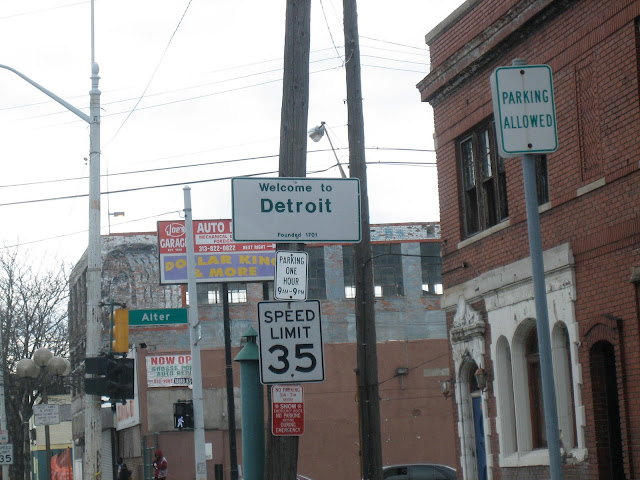
I did not get into the U of A. So next year Adrienne and I will be living in Detroit. Pray for us as we go through a difficult time.
Saturday, March 31, 2007
On language
"The nuts and bolts of the European union are hardly riveting, but a basic knowledge of its institutions are essential to understanding how it works." The Economist
Did you catch it?
This is why I enjoy the Economist. It's so subtle, it makes perfect sense without full understanding. I often find myself laughing outloud as I read it. the way the editors manage to turn words in a way that seems perfectly natural so that you are often left wondering...was that intentional? National Review occassionally has a clever play on words in its opening section. They are humorous, but bald.
I'm not sure I've ever read another magazine on current events that even attempted a joke.
Friday, March 30, 2007
On brackets
I made out a bracket on ESPN.com this year. A friend sent me an invitation so I filled a few out. I am reminded again why I don't fill out brackets.
I am an intensely competitive person. Games of all sorts require of me a rigid self-control. If I play a ball game I have to forget the score. If I play with the sort of person who repeats it after every play the ruthlessness emerges from its lair. It is a force of nature which I have fought for years to bury and to kill. Board games are a bit different. It's harder to forget who's winning. When I play a board game one of three things generally happens. Sometimes I give up and enjoy the game. This is a victory for me though I generally lose. More often I try to win. Either I do win, in which case the victory is hollow, leading only to the desire to win again; or I lose, in which case I get this terrible sinking feeling in the pit of my stomach. This leads me to be unbearable around as you all well know. I become a surly wreck. Well everyone who is likely to read this blog has seen that so I won't explain further.
Which leads me to brackets. One of the joys of the tournament for me is rooting for the underdog. I would love nothing more than to see a 16 seed take out a 1 seed someday. But my competitive nature impels me to fill out a bracket as I think the tournament will actually turn out, not as I hope it will. I just can't fill out a bracket with four 16 seeds in the final four. I also want my bracket to win. Which means that when the games are going on I find myself actually rooting for the higher seeds. And so I can't root for the underdog, and the one thing that makes the tournament enjoyable for me.
So next year no brackets. Until next year by which time I will have inevitably forgoten the lesson I learned this year.
Thursday, March 15, 2007
And the Ides Have It
Happy Ides of March Julius Caesar. I hope that all of my loyal readers (all 4 of you) are luckier today than he was on his last Ides.
Friday, March 09, 2007
On Beethoven
I'm listening to John Eliot Gardiners renditionof the third symphony. This, I have conluded over the last few years is my favorite Beethoven symphony.
Tuesday, March 06, 2007
A Review: The Bonfire of the Vanities
It's ironic that Steven used this as a post title; I had this post ready to go and it somehow got deleted about a week ago.
Suffering is a basic element of human existence. We do our best to ignore it when we can, and we try to avoid it when we can no longer deny it. It is generally only the truly desparate or introspective who recognize its place in our lives. It is a deep and strong psychological force, even when we refuse to recognize its existence. Most of the vices of men are sought, at least in part, in an effort to alleviate this suffering: avarice, gluttony, envy, lust, pride, even anger is a response to perceived injustice. Suffering has been a basic component of the human condition since the arrival of sin in the world. Our separation from God entails suffering. Even in the post Christ age we still inhabit a fallen world.
Tom Wolfe's work rests on the recognition of this fact. In each of his works that I have read the main character begins the story in the flight from suffering. Over the course of the novel, they are slowly forced to recognize its existence and eventually embrace it as a fundamental piece of their identity and existence. This storyline lends itself to incredibly moving tales when woven by the master storyteller that Wolfe is.
The Bonfire of the vanities is no different. It is divided roughly into thirds: a comedy of errors in which McCoy goes to ever increasing lengths to protect the myth of his own greatness; the tragic and methodical unravelling of the web of lies he has surrounded himself with; and a heroic tale of of his struggle to reconcile himself to reality and at the same time stand up and fight. He undergoes a fascinating transformation from a weak--though emminently successful--disembler, into a strong--though eminently unsuccessful--human being with a firmer grasp on the reality of life.
The story is a tale of facades, some crumbling, some rising some to protect from the self, some to protect from the outside, but all ultimately designed to shield ourselves from the recognition that suffering exists.
Friday, February 16, 2007
On "nonessential theology"
I think that this statement needs a little clearing up, because Steven is right that it doesn't come off quite right in the previous blog.
Let me be clear: I think that there is a right answer to every theological question. I don't think the God of the Bible comes across as a do it yourself kind of God. But I also know that we are deeply flawed beings who are rarely entirely correct on anything. We are the almost-there-people, the I-think-I-know's. In the flesh we are incapable of fully understanding God or our relationship with him. We are called to serve , follow and trust that he will reveal himself to us. If we keep this in mind, we can recognize that there will never be the kind of uniformity-of-thought that appeals so much to the logical mind. Our beliefs are in part a result of our personal, family, and community history, so theology is a very diverse field. I think this is okay, not because I think that all of these ideas might be right--clearly they cannot all be right--but because I can recognize my own inability to say authoritatively that I know.
So I think that discussion and argument are good. And I think that we need to continue to search after the one truth--God. Christ said he was the way the truth and the life. In seeking him we seek truth.
So this is where we come to my--perhaps artificial distinction between essential and nonessential theology. I think that there is a certain corpus of thought (I think the Nicene Creed is a good place to start) based on the Bible which is essential to Christianity. I also think that there are a lot of grey areas where uncertainty looms. This is the realm of thought, discussion and debate. But in this realm, even if we disagree we can recognize the Christian-ness of the other.
In this I follow Augustine who said--"In essentials unity, in nonessentials liberty, and in everything charity."
Thursday, February 15, 2007
On Church
I started thinking about Mark's questions in his post the other day. So here are my thoughts on church and worship(half-formed and dimwitted perhaps):
Somehow in our culture there has been a profound shift in the way we view church. We often see it as a place we go. Church has become identified with a location and an experience. For many in our culture, church is nothing more than a worship service. I don't think this is a Biblical model.
The church should instead be seen as something we are a part of. It is us. We are the church. The building isn't the church, the service isn't the church, we shouldn't "go to church". In the Biblical model as I see it, the church is the Body of Christ, it is the community of Christ followers. When we see church this way I think, worship and worship style become a lot less of a problem. We gather together as a Body to worship corporately, but that is not the full extent of our involvement in the Body. We gather together in each other's homes, at Starbucks, at work, in the park...in everything we are the church. It is in this sense that Christ becomes our identity.
It is through obedience in this that we truly worship God. Jesus didn't laud the sheep and blast the goats for their synagogue attendance. He applauded and chided them for their attitude towards the downtrodden and oppressed. He called us to seek the will of God in everything, not just how many guitars are appropriate on Sunday morning. If we truly seek community in Christ, and seek his will in everything, then we see the divisions within the church faling away, and Sunday morning fading to an important, but not central event in our lives.
If we see church this way I think that denomination becomes less important. There are two senses in which the body of Christ is a community. The first, essential for success in the other, is local. I am a part of a certain body of believers. We gather together on Sundays and during the week and form a small tight-knit community with overlapping bonds that hold us together. The worship service and nonessential theology of our church is a reflection of our own unique backgrouds, callings and relationships.
The second, also very important, is global. In this manner I am linked to every Christian in the world. It is important to remember this and to reach out in love to other Christians. But it is important to remember that we don't worship corporately or discuss theology with all of them. Every part of the Body has its own mix of style and substance. But that is not a concern of mine. I am not called to conform hem to my image, I am called to love and live in brotherly harmony.
That said I think that there are a few basics--essential philosophy. I personally think the Nicene creed is the best explanation of what is essential to the Christian faith. Beyond that, I think there is a wide degree of latitude in what is Christian. This is something I learned from the Eastern Orthodox Church.
To sum up I think that worrying about denomination is less important than we often think, and that nondenominational is a positive movement. As long as it is accompanied by a strong commitment to community and a reaching out to the global chruch, it is a recognition that denomination is a relic of a word.
Tuesday, February 13, 2007
On the mind
It's weird how the mind works.
I don't really spend any conscious time worrying about getting into medical school, at least I haven't yet, though I can feel that time drawing closer.
But it still weighs on my mind. At least I think that's what it is. Lately I just don't seem to be myself. My mind isn't functioning properly. Part of it is that a large part of my mental ability and especially endurance goes into school every day. The mental agility required to keep up with roomful of curious 10 year olds is suprising.
But there's something else, and it has grown stronger and stronger as the time approaches. Having not heard in January I became a bit apprehensive, but over the last two weeks as the middle of February approaches I have begun to doubt myself. The "If I get in"'s have snuck their way back into conversation without anyone noticing. I feel like it saps my mental energy. Maybe I'm just a wimp. Plus we've had people over for dinner every night for the last week. I know that saps my energy.
Thursday, February 01, 2007
On time
As I read through my last post I was reminded of a Seinfeld episode where Kramer decides he's only going to sleep for 20 minutes every three hours so that he can have all sorts of extra time to get stuff done. Besides the obvious getting incredibly tired and falling asleep everywhere (he stops the program after he wakes up in a bag in the Hudson river if I recall) he finds that he is incredibly bored. He wakes Seinfeld up at four in the morning because he can't think of anything else to do.
I have often said that I wish that I could operate on a 30 hour day while everybody else was on a 24 hour day so that I would have more time to do things and not be so stressed out. True I would probably still manage to fill most of my time, but perhaps with an extra few hours every day I would be able to find more time to relax intentionally. I try to set aside time daily and weekly to relax without the distractions of life, but I rarely have as much time as I would like.
I have long argued for a simpler life (and lived a very busy one). Setting out my daily schedule like this helps me to see how much of my time is used up by certain things. I try to cut things out, but right now looking at the schedule I can't find anything that I would willingly cut. Even on the weekends, the only thing I would cut if I was secure about going to medical school next year and not having to apply again is the volunteering.
So my question is, how do you simplify your life, apart from quitting your job (not really an option at this point)? My time is used in five main ways: the two biggest are sleep and work, neither of which is cuttable. I've completely given up working at home and we jet out of there as soon as school is out. The next biggest is family time--child care and time with Adrienne. If anything I would like to expand rather than cut this area. I love spending time with my wife and if it were possible I would quit our jobs and spend all day together while preschool is in session. Next is relaxation/alone time. I have to have time alone each day, preferably at the beginning and at the end to maintain my sanity and stay connected to God. Again I wish I could do more of this. The fifth is community building. Adrienne and I intentionally spend a sizeable chunk of our time with other people, having them to dinner or going over to their place. I feel like it is part of God's calling for each of us to spend time building relationships with other people (see my first few blogs on this site). And that's it. There's not really anything in my life that doesn't fit into those categories, yet I am still incredibly busy.
One thing that would help would be working closer to home. An hour in the car is an hour lost everyday, though it's not so bad since we get to ride together and enjoy each other on the ride.
I don't think I am alone in these thoughts. In conversation I have heard the same thoughts from a lot of different people. So how do we simplify our lives? And would it really make us happier?
On A Day in the Life
Everybody Else is doing it so why can't I:
5 AM alarm followed sometime in the next half-hour by the sound of feet quietly easing to the cold cold floor
Make coffee, read Bible, time permitting take dogs for walk
6 AM wake up rest of family breakfast duty with the little one, clean kitchen, make lunches
7 AM leave house, stop at preschool, continue to work. If we leave at 7 it takes 20 minute, if we leave at 7:10 (more common towards the end of the week) it takes 30. Get to work, prepare for day, make lesson plans, review material, create longer list than neccessary of things to do during the day.
8 AM begin school--generally with boardwork and oral review, then on to writing. We do a new writing activity twice a week with the other days given to editing and reading.
10:30 AM Break--generally spent teaching students who have fallen behind between mouthfuls of my snack (bran muffin and an orange)
10:50 Back to class for Math. Generally I make this section up as I go along, teaching whatever the students are struggling with.
1:00 Lunch Spent the same way as break (Peanut Butter and Jelly, an apple or peach, chips and a Diet Coke for lunch)
1:45 Back to work for Vocabulary, Geography, and whatever else I came up with in the morning--sometimes reading comprehension or a spelling bee or some sort of boardwork)
3:00 PE--at last teaching is done and I can have some fun with the kids before they go home
3:30--schools out and we try to hurry home. A delay of 20 minutes in getting out of school can mean an extra half hour on the road
4:30-5 PM get home prepare dinner, check e-mail and blog, pick up house, take a walk (not always)
This part of the day is highly variable--Tuesdays we go to the Seneca house, Wednesdays we get home after six due to the teachers meeting, Thursdays and Fridays we generally have people over or have some other activity.
6 PM dinner
7 PM bathtime, pjs brush teeth, read kids books (I have become a big fan of Dr. Seuss, his books are so fun to read outloud)
8PM bedtime, spend time with the wife--watch TV, read, blog, relax
9PM bedtime number two, read (by this time of the night all I'm good for are magazines and pulp fiction--my brain is fried by the mental involvement teaching requires) feed the dogs, wash the dishes, drink a cup of tea, write in my journal (this is probably the time of deepest connection to God during the day.
10:30 PM give or take a half hour: bedtime number three
Weekends
6 AM wake up to the sound of my name whispered by a face inches from mine, wake up drink coffee, take care of small child until 9 or so.
9 Saturdays work on projects around the house--painting woodworking
Sundays volunteer at hospital
12 Saturdays clean house do laundry
Sundays go shopping for weeks groceries
4 PM Saturdays go on date or have friends over
Sundays go to church
bedtime ritual largely unchanged
Tuesday, January 30, 2007
Fear this
How's this for something to fear? God says he will harden Pharoah's heart so that He can punish him so that the Israelites can see the power of God.
This is something that from time to time in my life has caused me a great deal of anguish. Here's why: It shows the sovereignty of God. He is omnipotent and he uses that power to accomplish his purpose. I have or at least feel like I have very little to say about that purpose. Take the case of Pharoah. He ran up against the will of God in the worst way and paid for it with everything he held dear and still didn't have the chance to follow God at the end. His problem wasn't in what he did, it was in who he did it to. Hundreds of Pharoahs acted in a similar manner and didn't receive any temporal punishment. Instead they got to live a life of luxury and build impressive monuments to themselves on the backs of other groups of people who weren't the chosen of God.
This Pharoah ran up against God's chosen people at the particular time God had chosen to call them and give them a sign of his faithfulness. So the question that inevitably rises in my mind is why this Pharoah at this particular time. The same question arises--why Jacob and not Esau? or why Abraham and not some other nomad wandering out in the desert? or why Isaac and not Ishmael? None of these questions seems to have an answer that can be answered by human understanding. Why are some called by God and some not? According to this passage and others--because they fit his purpose.
This is not a critique of God--just an openly asked question. Why are some chosen for punishment? and if Pharoah, why not me?
Monday, January 29, 2007
A Review: Babel
What do an ageing illegal immigrant in the US, a couple vacationing in Morroco whose marriage is on the rocks, a teenage shepard in the morroccan desert and a deaf Japanese girl stuggling with daddy issues have in common? Not much apparantly.
That's about it for the movie.
On to the movie theatre. Why do we continue to patronize them?
Here's my summary of a trip to the theater. First, it has an 18 dollar entrance fee for a couple makes it just about the most expensive date possible, even with a relatively inexpensive meal beforehand. Then you are crammed into room with hundreds of strangers. Airplanes excepted it is probably the most crowded place you are likely to experience in contemporary American life. Even with stadium seating and the bigger modern seats you cannot escape the stifling crowdedness of the place. As you walk in the popcorn crunches and the soda sticks underfoot.
Then you're stuck. The seat even if comparably comfortable quickly annoys. It doesn't recline and there's nowhere to put your feet. You can barely change position without disturbing someone--not that there is any reasonable way to change position. And you can forget about going to the bathroom. Not only will you upset everyone between you and the aisle, but you can bet that they'd all be upset if you asked them to pause the movie for you.
In addition to all this you have to be quiet. I can't talk to my wife about the movie as it's happening, and I can't laugh when I find things funny unless the filmaker intended them to be so (which is why I didn't watch An Inconvenient Truth in the theater). I got caught a couple times during Babel and got the evil eye from my wife. And if I miss something I can't rewind the movie to understand it. I just have to make up the storyline as I go.
When I compare this to watching a movie at home I conclude I must be crazy. At home it's free, comfortable, uncrowded. I can pause when I want, and even stop it for a few hours to be continued later.
SXome would say that there are movies that the theater improves, by which they mean it is louder, brighter and more likely to induce nausea. To that I say, Bah! give me a movie at home with my wife over one in the theater any day of the week.
Sunday, January 28, 2007
On fear II
So I've been thinking about this fear thing lately. It seems from my knowledge of the Bible that the phrase "fear of God" is intended to convey more than I have ever fully accepted, but less, I think, that what I have occasionally heard from others.
I think that the authors of the Bible were serious in their admonishment to fear God. And in intimate encounter human beings were undeniably afraid of God. The first such example is the case of Adam and Eve. Post-sin, they were ashamed and afraid, and so they hid from God. Moses certainly felt the fear when he spoke to the burning bush. And Isaiah's account includes its share. The one thing that all of these accounts share is a sense of insufficiency, and a recpgnition of God's role in Creation and judgement.
Judgement--a word from which our culture recoils. How often in a modern church do you hear about the judgement of God...and yet in a cursory search from memory, it is mentioned more often in the Bible than the love or mercy of God. But wait you say--Judgement is the Old Testement paradigm...the New Testement is all about the love man. I haven't researched exhaustively, but I'd bet that Judgement is a more common theme, even in the new testement. It is an inescapable part of the character of God. Ask yourself...would you really rather believe in a God that is morally neutral, or one that holds each individual to account for his actions. Should God really put me and Hitler on the same moral plane. In a certain sense of course, yes. We are both sinful wayward creations. But in another sense no. If God id truly God then He will hold Hitler to account for each of his actions.
So what does judgement have to do with fear? I'm not sure. But I think that when we truly have a firm grasp on our relationship to God and truly understand his holiness and our sinfulness then we will recognize that we have no option save to throw ourselves at his feet begging for mercy. This is I believe the beginning of the fear of the Lord. It is a constuctive fear. I am at a certain level, terrified of fire...for good reason. This fear leads me to respect its potential and to take steps to keep it from killing me. The same goes for water, cars, sharp sticks, pit bulls and God.
But doesn't this fear stop once I become a Christian and the threat of hell recedes? Perhaps not. According to the New Testement we will be held to account for our actions as God's servants. Will we be prepared for Judgement? As Paul says, if we build a house of straw we will escape on Judgement day as one escaping from flames. And according to the book of Revelation there are to books, the book of life and eht book where all our deeds are recorded. So the fear of God that stems from this recognition refines us and spurs us to greater heights.
To be continued...maybe
Tuesday, January 23, 2007
On a new technique
I tried something new tonight. I edited "On fear" as I was discussing it with a group of friends on a laptop with wireless internet...It was an interesting experience. Needless to say I stole some ideas. I may try it again.
Sunday, January 21, 2007
On a Holiday
This post would have been more meaningful if I had posted it on Monday when I wrote it. But I'll post it now in an abbreviated form anyway.
I had Monday of work. It was great. MLK Day is a great holiday for teachers, serving much the same purpose as Labor day...allowing us to ease into a new semester with an early three-day-weekend. But MLK day is a mystifying Holiday. As far as national holidays go it is unique I think. Some national holidays are pre-nation--Christmas, New Year's Day, Easter--some recognize significant events--July 4th, Veteren's Day--and some recognize groups of people--Veteren's Day, Memorial Day, Labor Day. One even recognizes a pair of individuals--Presidents Day (Washington and Lincoln). But only one, as far as I know, recognizes one person--MLK Day.. What's so special about Martin Luther King Jr.? Sure he made a significant impact on our country, but does he really deserve recognition as the only person to get his own holiday. Is he really the person who made the greatest impact on American history?
It's just an odd occasion for a holiday.
On Fear
What does it mean to be afraid of God?
"Who then is the man that fears the Lord. He will instruct him in the way chosen for him. He will spend his days in prosperity and his descendents will inherit the land. The Lord confides in those who fear him; he makes his covenant known to them."
I have often passed over references to the fear of God with a glib reminder to myself that it only really means respect or love. But what does it really mean to be afraid of God? I was struck this morning as I read this passage in Psalms. I would like some input here. What does it really mean to be afraid of God. Are you afraid of Him? If so, what does that look like?
We are quick to say that it doesn't mean to be terrified of God, but there is something terrible about God...not in a bad sense, but people tremble before God--think of Isaiah, or of Moses. When people encounter God in the Bible true terror is often the result.
I have heard many stories about people who have had very real, emotional, spiritual encounters with God and find themselves terrified.
It seems like perhaps we have lost the healthy fear of the sovereign that was common to most people in history. We have so much control over our lives that we lose sight of our own fragility. As our culture has changed we have done our best to remove or ignore the mystery of God, We turn our backs on the power of God.
Friday, January 05, 2007
A Review: The Lost City
In 1958 Cuba was held in the tightening grip of Fulgencio Batista, erstwhile democrat, reinvented as stereotypical Latin American strongman. Idiomatically as he squeezed power tighter and tighter, more and more groups began to slip through his fingers. The most famous now, though not neccessarily then was that led by Fidel Castro and Ernesto "Che" Guevarra. There were others, however. In the post WWII world on the back doorstep of the United States each of these groups sought to appeal to their bigger neighbor by speaking of democracy and pluralism. Paradoxically most also used the anti-imperial language of the day to argue against Batitsta as a stooge of the United States, propped up to ensure stability in the Carribbean in the early days of the Cold War.
In the end, Castro and Guevarra marched into Havanna on January 9, 8 days after Batista fled the country. They quickly abandoned any democratic ideal in favor of the brutal imposition of communist ideals. Guevarra was a particularly idealistic revolutionary who uickly set about reforming the economic, political and social systems. This involved lots of killing, lots of forced labor and lots of Cubans fleeing to semi-voluntary exile in New York and Miami. He was a classic example of a person who believed that the ends justify the means. He took this philosophy to its fullest extent, using the worst forms of injustice in pursuit of paridise for the people he genuinely loved.
Most literary and cinematic treatments of this period of Cuban history take one of two tracks. Either they portray Fidel and Che as idealistic revolutionaries bringing joy to the people, or they portray them as evil power grabbing monsters looking for a country to rule so they could confront the United States. Che in particular is rarely portrayed realistically.
The Lost City succeeds in presenting this period realistically to a degree I have rarely if ever seen. Batista is shown as the nasty tyrant he was, Fidel is shown as the would be tyrant he was, Che is shown as the amoral idealist he was, and the manifest failings of the communist revolution to shape a functioning society are at least alluded to.
It is the story of a nightclub owner Fico Fellove, played well by Andy Garcia, who is trying to hold together his splintering family and business through the trials of the time. One brother goes off to join Fidel in the mountains, another leads a band of would be liberators on a suicide mission to assassinate Batista in his palace. As Fidel begins to consolidate control and pressure mounts his club is shut down, his uncle killed for his tobacco plantation, his friends killed by his brother. Eventually he flees to the US to start over.
The movie is fascinating as a picture of the times, refusing to shed favorable light on any of the players, chosing instead to show it as the very difficult and trying time that it was. It is also an excellent portrait of an individual trying to make sense of the insanity of the world around us. Fico is forced out of his comfortable existence and forced to see and interact with the reality around him. It is a little slow at times, but there's a nice romantic twist and Bill Murray is funny as Fico's disillusioned friend. It is in English, which can be a bit disconcerting, but overall it is very well done.
Monday, January 01, 2007
On suffering
So it has been noted by finer minds than mine that most quality literature and in fact art deals with what most people would consider negative emotions--Fear, anger, betrayal, sadness, loss--and very little deals with things that we would actually want for ourselves--happiness, love... It has been noted that perhaps the downer side of art is more popular because it is truer to life--we do suffer, so we want to read about others doing so. This is I think at least in part valid.
But I have come across an interesting fact that may shed some light on why the darker side of life appeals more to us and why sad stories seem to move us more than happy ones.
"Most neuroscientists now recognize six basic emotions: anger, disgust, fear, joy, sadness and suprise [and a small number of] higher emotions such as embarrassment, shame, and sympathy."
Reading this list, one thing strikes me--we are hardwired to experience suffering. Perhaps this explains why even when we don't suffer we feel the compulsion to find suffering in our lives. It explains Western guilt and teenage angst. I suppose we developed this system of emotions to deal with life as it was lived by most of our ancestors. So the next time you're feeling down in the dumps, take comfort in the fact that you are feeling the suffering of thousands of generations of emotional development.
Subscribe to:
Posts (Atom)