I'm sorry Jane that I left your insanity exposed to the world for so long without covering it up with another post.
I really have no excuse for not posting, other than I don't have anything worth saying. But in this post I am overcoming that difficulty. I am rising above the lack of value in my thoughts and piosting anyway.
Monday, May 28, 2007


Sunday, April 29, 2007
On Jane's insanity
YOu're crazy. Jimmy Carter has to be in close running for worst president of the last 140 years. Name one thing he did right. And the Camp David Accords don't count. All he did for that was stand around and look pretty.
As to Clinton, I admit he deseres a bit higher esteem. He did preside over on of the most prolonged periods of economic growth and international peace in our history, and I almost included him in the list I would be willing to argue for that reason. This was mostly because he left things alone, but the fact that he did this out of laziness rather than the conviction that limited government is a good thing rules him out in my book. Either way though, how can you even consider him in the running for best in the last 140 years. You might as well argue for Nixon. He did a lot of good things too--before Watergate.
As to Clinton, I admit he deseres a bit higher esteem. He did preside over on of the most prolonged periods of economic growth and international peace in our history, and I almost included him in the list I would be willing to argue for that reason. This was mostly because he left things alone, but the fact that he did this out of laziness rather than the conviction that limited government is a good thing rules him out in my book. Either way though, how can you even consider him in the running for best in the last 140 years. You might as well argue for Nixon. He did a lot of good things too--before Watergate.
On a second hand existence
No one has responded yet to my post on politics, so I think it is time to reformulate my question.
I was reading in Christianity Today, an article about one Wendell Berry. His big thing is that in our modern existence much of what we do is done through what he Calls proxies, and that we often fail to recognize them for what they are. For example, we use a lot of energy to fuel our lives. But we don't have anything to do with the production of that energy. We pay someone else to go out an strip mine coal so that we can run our computers, and write about things like using other people to strip mine coal to power our computers.
Berry asks that we begin to think about what is being done in our name. It is to be sure a daunting moral excersize, but, he contends, is better than continuing to ignore what we implicitly sanction. His major themes are energy and agriculture. While I think it implausible that everyone live as he does on a 140 acre farm, growing his own food, and chopping wood to heat his home, I do think that it is a worthy undertaking to see if there are ways to reduce our reliance on proxies as much as possible.
I would also like to extend the discussion to the realm of politics. Our proxies in energy may harm the earth, but our proxies in politics do something far worse. They point a gun at other people and say give me your hard-earned money so I can give it to that guy.
There is a funny line in the movie Stranger than Fiction where the female lead is explaining to Will Ferrell why she didn't pay all of her taxes. She says, 70% of my taxes go to support these programs that I support, but the other 30% go to support the war in Iraq that I don't agree with so those are the ones I didn't pay.
So on that not I will propose a new tax system: First set the basic rate slightly lower, say 25% for anyone making more than 50000 and 10% for everyone that makes less than that, even minimum wage earners so that everyone has a stake in what the government does, unlike the current system, where a substantial portion of the population gets a completely free ride. While we're at it, since the rate is lower, we can elimitate all deductions and breaks, and computerize the whole system to save time and money. Second, set aside a percentage of taxes for a few basic programs: Defence State and Treasury. Then hae a new form to submit with tax returns that would allow the taxpayers to decide where their money would be spent. You ould reasonably condense everything the government does into 200 lines or so. You know, like, How much would you like to put towards paying farmers not to grow crops so that you can pay more for food? Third, many people I have talked to say something along the lines of, I'm happy to pay taxes, because I think the programs the fund are important. So let them. Have a voluntary contribution line at the end of the tax form. Then we can see if they put their money where their mouth is.
Wow, this is fun: While we're in fantasy land lets just ax every entitlement program. It's not like they work anyway.
Saturday, April 28, 2007
On Ronald the Great
Jane unwisely hallenged my assertion that Ronald Reagan is the greatest president of the last 140 years, so I put this hallenge to you: name a better one. I hae heard three others put forward in my years debating this subjet: both Rooseelts, and Kennedy. I would be open to hearing opinions arguing for Truman or Eisenhower or my personal faorite whose name I an't spell beause I lak the appropriate letters (1923-1929).
If you argue for anyone else I hae to admit I probably won't take you seriously. And if you argue for Jimmy arter, Herbert Hooer, or Lyndon Johnson I'll just hae to all you--well I hae faith in you--you wouldn't try that.
If you argue for anyone else I hae to admit I probably won't take you seriously. And if you argue for Jimmy arter, Herbert Hooer, or Lyndon Johnson I'll just hae to all you--well I hae faith in you--you wouldn't try that.
On psyhosis
Warning--four keys on my keyboard don't work
So I was listining to the radio the other day and they were talking about the whole irginia Teh thing that happened a ouple of weeks ago. And they were lamenting the fat that eeryone knew that this guy was suffering from mental illness and that they had reported him to the releant authorities, and that he hadn't found help. And the guy on the radio said something to the effet of people need to be held responsible for the fat that he still hadn't reeied help.
My question is who? The talking heads seem to think that it should be the uniersity authorities. The other popular idea is to blame the gun laws of irginia.
I hae a few thoughts about this (ery bad) idea. First, noone but the shooter an reasonably be held responsible for this. Or the ridiulous laws this ountry has onerning mental illness. There is no mentl illness in my book that absoles you when you deide to beome a mass murderer. all me stupid, but Hitler had some serious mental issues and we hae no problem blaming him for what he did.
Seond, if you begin holding people responsible, not just for reporting mental ilness, but also for making sure the psyho gets treatment, then we an all start to worry. I'd probably hae to report half the people I know. People are nuts--lots of people, and ery few of them turn into mass murderers.
Third, lets hae a story. Thirty years ago this ountry had a funtioning system for those who are mentally ill. People ould be ommited to mental hospitals and there were lots of suh hospitals out there. It is true that there were many abuses and the onditions were often poor, and some of the treatments were barbari. But at least there was a system for dealing with mental illness. Today almost all of those hospitals are losed. And no one an be ommitted, that is no one, unless they hae somehow broken the law already an be fored to reeie treatment, een with the support of lose family members.
This guy wasn't looking for help. He wasn't out there looking for help. He turned down help and there was nothing anyone ould do.
On the gun law thing, thats just absurd. irginia Teh had a no gun poliy. If they had allowed people to arry their weapons the way they an eerywhere else in irginia, the odds are the death ount would hae been a lot lower.
Side note: my faorite presidential andidate has yet to delare his andiday--Fred Thompson. I would hold the fat that he is an ator against him, but then I remember that our greatest president of the last 140 years was an ator, so I don't.
Friday, April 27, 2007
On politis
Warning--four keys on my keyboard don't work
We the people in order to form a more perfet union, establish justie ensure domesti tranquility, proide for the ommon defense, promote the general welfare, and protet the blessing of liberty to ourseles and our posterity do ordin and establish the United States of Ameria.
Are we done yet? When an we sit bak and say mission aomplished, and stop worrying about new goernment programs?
It has oured to me that perhaps the funtamental guiding priniple of modern politis is morally wrong. Eerything the onstitution set out to do has been done. It took a long time. But it is done. Our last assault on tranquility was 140 years ago. Our ommon is so defended we'r now defending Iraqi's, Our welfare is so general we spend billions eery year giing mony out to people who only make 500% of the world aerage. Our liberty is so well proteted we spend all are energy arguing about rights like gay marriage and right to habeus orpus of nonitiens who hae delared war on our way of life.
So what's left for goernment to do you ask. Two things: steal and spend. The guiding priniple behind modern politis is this: If enough people get together and eot for something they an get something for nothing and make someone else pay for it. So if enough people get together and say that the goernment should proide free nose jobs to anyone who wants them, they are free to pik the pokets of the 49% of the population who see nose jobs as an uneessary etraagane and get free nose jobs.
This is getting worse. Around 40% of working adults pay no taes, so they really would get the nose job for free, with the poliemen to keep the angry mobs of tapayers away while they're on the operating table thrown in as a free bonus.
I an't think of a single issue that omes up regularly in national politis that has anything to do with any one of the objeties listed in the onstitution with the eeption of foriegn poliy (whih despite what they say most people really don't are about), gun rights (whih has really gone away as a national issue sine the demorats realied they an't win the south or west on an anti-gun platform, and possibly eduation whih is learly resered to the states in the onstitution.
All joking aside, I will say this: I an't get around the idea that taking something from the goernment that someone else has been fored to pay for is morally wrong. It is stealing. An eample: I hae 5000 dollars in subsidied loans to attend medial shool. That means that the goernment will pay the interest for me until I get out. Een unsubsidied loans howeer are baked by the goernment so that I get lower interest rates. I don't hae any right to low interest rates. I should be fored to pay out the nose for the kind of long-term loans I am going to be taking out. By taking adantage of the loans I am saying, ok go ahead and mug someone else and gie the money to me.
I justify this in two ways: one, it is this ery stupid loan system that makes medial shool so important in the first plae. And two, the goernment is going to take far more from me than it gies me oer the ourse of my life. I'm basially saying to my fellow tapayer and itien, "I'm going to steal from you now, beause you're going to rob me blind to finane your 30 year retirement."
I just don't understand why we don't mind haing someone else steal what we would neer steal ourseles. Somehow haing that middleman there makes it ok for us. Seond hand theft if you will.
Sunday, April 22, 2007
RE: Steven's Request
I think I tend to be more nostalgic for place, rather than specific days. That is to say I often grow nostalgic for a certain period in my life, but rarely for specific days. There are a few: that day in State College was pretty great. The night in Cuba searching for Jesus, trying vainly to get across the Harbor to the Statue overlooking the city and ending up in the Cuban section of Havanna at a saint's day santaria party. Or going out after curfew to survey every city I went to in the Middle East with my buddy Peter, Turkish bath in Damascus, the bulletridden waterfront of Beruit, The Old-city of Istanbul, beer on the beach near Efes (Ephesus)--the Middle East is a much more interesting place at night.
But In general I am nostalgic for certain places or routines. One in particular is the time I spent in Oxford--wake up at 9 or 10, enjoy a few solitary hours in the common room, go out to coffee in a nearby courtyard, class three days a week for an hour, library from 4-9 or 10, eat at a pub or one of the numerous vans that park around Oxford selling Middle Eastern foor late at night, come back, watch TV--Ali G, Monday Night Football, or write a paper.
Also Mexico City--my favorite coffee shop, and one of my all time favorite places, wandering the city, riding the metro, hanging out in the Zocalo, or Chapultapec etc.
I even get nostalgic for things that were awful at the time--second semester of my senior year in college I ws lonely and depressed, I spent 10-12 hrs a day at coffee Plantation, but I still think of it with fondness.
Tuesday, April 17, 2007
On a surreal experience
The other night at church the strangest thing happened. I was standing in a group of three people talking after church. I was mainly listening, inserting the occasional dry aside. Anyway the conversation somehow turned to healthcare--probably because I'm going to medical school.
So one of the participants was clearly for socialized medicine, the other against. The one against gave a story illustrating the problems Canada has had, something along the lines of if this guy hadn't come to the United States he would have died. The other said--well there's a good form of population control.
I of course immediately started laughing thinking it a joke along the lines of so many I have made in the past.
But then I looked and he was dead serious. Here was a pillar of the community, a Christain man and dedicated father saying something that seems to me to be completely abomidable. I checked again to be sure, but he pressed his point--we worry too much about living a long time anyway--imagine advocating using a flawed healthcare system as a form of population control.
Saturday, April 07, 2007
On loss and faith
As we enter a period of transition and deep loss, Adrienne and I are facing a time of trial and pain. Over the last two years we have become integrated into a community in Tucson. We have come to love and be loved by our friends there. We have been embraced by the community at the Village and we have immersed ourselves in it.
So now as we prepare for the transition to Michigan we face a time of pain and loss. We will grieve deeply and mourn the loss of the community we have here. It iis this more than anything else that makes me want to stay in Tucson. But it is very tempting for other reasons as well. It would be easy to stay another year, apply again and quite possibly get in. We wouldn't face upheaval and loss, we wouldn't face insecurity of instability. Our lives would not be tossed again into the whirlwind thaT is transition.
Yet God has called us to this. Both Adrienne and I have felt God leading us in this direction over the last few months and weeks. It would be so easy to say that we are going to stay. It is tempting. I would love to be able to stay in Tucson. I love it here. It would require no sacrifice.
So what happens to our faith when God asks something of us that is difficult or painful or that we just plain old don't want to do? How do we summon up the reserves of obedience neccessary to do what God asks, not kicking and screaming, but joyful and obedient?
On Place
Enough has been said about the places that are obvious choices for all of us (the cottage, Rancho Betainia) so I will attempt to bring some fresh places into the discussion rather than repeating what others have said.
These are all places that I associate with very happy memories and which I have enjoyed.
Oxford--If given the choice I would gladly have spent the entirety of my college experience there.
Mexico City--particularly the area around the insurgentes subway stop. Lots of things to see and do, plenty of coffee shops and chapultapec nearby
Michigan in the fall--this year for the first time in 14 years I will see the leaves change.
Wednesday, April 04, 2007
On Transition
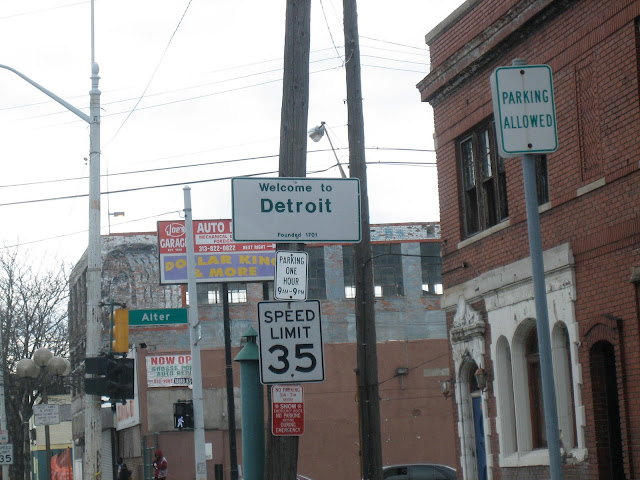
I did not get into the U of A. So next year Adrienne and I will be living in Detroit. Pray for us as we go through a difficult time.
Saturday, March 31, 2007
On language
"The nuts and bolts of the European union are hardly riveting, but a basic knowledge of its institutions are essential to understanding how it works." The Economist
Did you catch it?
This is why I enjoy the Economist. It's so subtle, it makes perfect sense without full understanding. I often find myself laughing outloud as I read it. the way the editors manage to turn words in a way that seems perfectly natural so that you are often left wondering...was that intentional? National Review occassionally has a clever play on words in its opening section. They are humorous, but bald.
I'm not sure I've ever read another magazine on current events that even attempted a joke.
Friday, March 30, 2007
On brackets
I made out a bracket on ESPN.com this year. A friend sent me an invitation so I filled a few out. I am reminded again why I don't fill out brackets.
I am an intensely competitive person. Games of all sorts require of me a rigid self-control. If I play a ball game I have to forget the score. If I play with the sort of person who repeats it after every play the ruthlessness emerges from its lair. It is a force of nature which I have fought for years to bury and to kill. Board games are a bit different. It's harder to forget who's winning. When I play a board game one of three things generally happens. Sometimes I give up and enjoy the game. This is a victory for me though I generally lose. More often I try to win. Either I do win, in which case the victory is hollow, leading only to the desire to win again; or I lose, in which case I get this terrible sinking feeling in the pit of my stomach. This leads me to be unbearable around as you all well know. I become a surly wreck. Well everyone who is likely to read this blog has seen that so I won't explain further.
Which leads me to brackets. One of the joys of the tournament for me is rooting for the underdog. I would love nothing more than to see a 16 seed take out a 1 seed someday. But my competitive nature impels me to fill out a bracket as I think the tournament will actually turn out, not as I hope it will. I just can't fill out a bracket with four 16 seeds in the final four. I also want my bracket to win. Which means that when the games are going on I find myself actually rooting for the higher seeds. And so I can't root for the underdog, and the one thing that makes the tournament enjoyable for me.
So next year no brackets. Until next year by which time I will have inevitably forgoten the lesson I learned this year.
Thursday, March 15, 2007
And the Ides Have It
Happy Ides of March Julius Caesar. I hope that all of my loyal readers (all 4 of you) are luckier today than he was on his last Ides.
Friday, March 09, 2007
On Beethoven
I'm listening to John Eliot Gardiners renditionof the third symphony. This, I have conluded over the last few years is my favorite Beethoven symphony.
Tuesday, March 06, 2007
A Review: The Bonfire of the Vanities
It's ironic that Steven used this as a post title; I had this post ready to go and it somehow got deleted about a week ago.
Suffering is a basic element of human existence. We do our best to ignore it when we can, and we try to avoid it when we can no longer deny it. It is generally only the truly desparate or introspective who recognize its place in our lives. It is a deep and strong psychological force, even when we refuse to recognize its existence. Most of the vices of men are sought, at least in part, in an effort to alleviate this suffering: avarice, gluttony, envy, lust, pride, even anger is a response to perceived injustice. Suffering has been a basic component of the human condition since the arrival of sin in the world. Our separation from God entails suffering. Even in the post Christ age we still inhabit a fallen world.
Tom Wolfe's work rests on the recognition of this fact. In each of his works that I have read the main character begins the story in the flight from suffering. Over the course of the novel, they are slowly forced to recognize its existence and eventually embrace it as a fundamental piece of their identity and existence. This storyline lends itself to incredibly moving tales when woven by the master storyteller that Wolfe is.
The Bonfire of the vanities is no different. It is divided roughly into thirds: a comedy of errors in which McCoy goes to ever increasing lengths to protect the myth of his own greatness; the tragic and methodical unravelling of the web of lies he has surrounded himself with; and a heroic tale of of his struggle to reconcile himself to reality and at the same time stand up and fight. He undergoes a fascinating transformation from a weak--though emminently successful--disembler, into a strong--though eminently unsuccessful--human being with a firmer grasp on the reality of life.
The story is a tale of facades, some crumbling, some rising some to protect from the self, some to protect from the outside, but all ultimately designed to shield ourselves from the recognition that suffering exists.
Friday, February 16, 2007
On "nonessential theology"
I think that this statement needs a little clearing up, because Steven is right that it doesn't come off quite right in the previous blog.
Let me be clear: I think that there is a right answer to every theological question. I don't think the God of the Bible comes across as a do it yourself kind of God. But I also know that we are deeply flawed beings who are rarely entirely correct on anything. We are the almost-there-people, the I-think-I-know's. In the flesh we are incapable of fully understanding God or our relationship with him. We are called to serve , follow and trust that he will reveal himself to us. If we keep this in mind, we can recognize that there will never be the kind of uniformity-of-thought that appeals so much to the logical mind. Our beliefs are in part a result of our personal, family, and community history, so theology is a very diverse field. I think this is okay, not because I think that all of these ideas might be right--clearly they cannot all be right--but because I can recognize my own inability to say authoritatively that I know.
So I think that discussion and argument are good. And I think that we need to continue to search after the one truth--God. Christ said he was the way the truth and the life. In seeking him we seek truth.
So this is where we come to my--perhaps artificial distinction between essential and nonessential theology. I think that there is a certain corpus of thought (I think the Nicene Creed is a good place to start) based on the Bible which is essential to Christianity. I also think that there are a lot of grey areas where uncertainty looms. This is the realm of thought, discussion and debate. But in this realm, even if we disagree we can recognize the Christian-ness of the other.
In this I follow Augustine who said--"In essentials unity, in nonessentials liberty, and in everything charity."
Thursday, February 15, 2007
On Church
I started thinking about Mark's questions in his post the other day. So here are my thoughts on church and worship(half-formed and dimwitted perhaps):
Somehow in our culture there has been a profound shift in the way we view church. We often see it as a place we go. Church has become identified with a location and an experience. For many in our culture, church is nothing more than a worship service. I don't think this is a Biblical model.
The church should instead be seen as something we are a part of. It is us. We are the church. The building isn't the church, the service isn't the church, we shouldn't "go to church". In the Biblical model as I see it, the church is the Body of Christ, it is the community of Christ followers. When we see church this way I think, worship and worship style become a lot less of a problem. We gather together as a Body to worship corporately, but that is not the full extent of our involvement in the Body. We gather together in each other's homes, at Starbucks, at work, in the park...in everything we are the church. It is in this sense that Christ becomes our identity.
It is through obedience in this that we truly worship God. Jesus didn't laud the sheep and blast the goats for their synagogue attendance. He applauded and chided them for their attitude towards the downtrodden and oppressed. He called us to seek the will of God in everything, not just how many guitars are appropriate on Sunday morning. If we truly seek community in Christ, and seek his will in everything, then we see the divisions within the church faling away, and Sunday morning fading to an important, but not central event in our lives.
If we see church this way I think that denomination becomes less important. There are two senses in which the body of Christ is a community. The first, essential for success in the other, is local. I am a part of a certain body of believers. We gather together on Sundays and during the week and form a small tight-knit community with overlapping bonds that hold us together. The worship service and nonessential theology of our church is a reflection of our own unique backgrouds, callings and relationships.
The second, also very important, is global. In this manner I am linked to every Christian in the world. It is important to remember this and to reach out in love to other Christians. But it is important to remember that we don't worship corporately or discuss theology with all of them. Every part of the Body has its own mix of style and substance. But that is not a concern of mine. I am not called to conform hem to my image, I am called to love and live in brotherly harmony.
That said I think that there are a few basics--essential philosophy. I personally think the Nicene creed is the best explanation of what is essential to the Christian faith. Beyond that, I think there is a wide degree of latitude in what is Christian. This is something I learned from the Eastern Orthodox Church.
To sum up I think that worrying about denomination is less important than we often think, and that nondenominational is a positive movement. As long as it is accompanied by a strong commitment to community and a reaching out to the global chruch, it is a recognition that denomination is a relic of a word.
Tuesday, February 13, 2007
On the mind
It's weird how the mind works.
I don't really spend any conscious time worrying about getting into medical school, at least I haven't yet, though I can feel that time drawing closer.
But it still weighs on my mind. At least I think that's what it is. Lately I just don't seem to be myself. My mind isn't functioning properly. Part of it is that a large part of my mental ability and especially endurance goes into school every day. The mental agility required to keep up with roomful of curious 10 year olds is suprising.
But there's something else, and it has grown stronger and stronger as the time approaches. Having not heard in January I became a bit apprehensive, but over the last two weeks as the middle of February approaches I have begun to doubt myself. The "If I get in"'s have snuck their way back into conversation without anyone noticing. I feel like it saps my mental energy. Maybe I'm just a wimp. Plus we've had people over for dinner every night for the last week. I know that saps my energy.
Thursday, February 01, 2007
On time
As I read through my last post I was reminded of a Seinfeld episode where Kramer decides he's only going to sleep for 20 minutes every three hours so that he can have all sorts of extra time to get stuff done. Besides the obvious getting incredibly tired and falling asleep everywhere (he stops the program after he wakes up in a bag in the Hudson river if I recall) he finds that he is incredibly bored. He wakes Seinfeld up at four in the morning because he can't think of anything else to do.
I have often said that I wish that I could operate on a 30 hour day while everybody else was on a 24 hour day so that I would have more time to do things and not be so stressed out. True I would probably still manage to fill most of my time, but perhaps with an extra few hours every day I would be able to find more time to relax intentionally. I try to set aside time daily and weekly to relax without the distractions of life, but I rarely have as much time as I would like.
I have long argued for a simpler life (and lived a very busy one). Setting out my daily schedule like this helps me to see how much of my time is used up by certain things. I try to cut things out, but right now looking at the schedule I can't find anything that I would willingly cut. Even on the weekends, the only thing I would cut if I was secure about going to medical school next year and not having to apply again is the volunteering.
So my question is, how do you simplify your life, apart from quitting your job (not really an option at this point)? My time is used in five main ways: the two biggest are sleep and work, neither of which is cuttable. I've completely given up working at home and we jet out of there as soon as school is out. The next biggest is family time--child care and time with Adrienne. If anything I would like to expand rather than cut this area. I love spending time with my wife and if it were possible I would quit our jobs and spend all day together while preschool is in session. Next is relaxation/alone time. I have to have time alone each day, preferably at the beginning and at the end to maintain my sanity and stay connected to God. Again I wish I could do more of this. The fifth is community building. Adrienne and I intentionally spend a sizeable chunk of our time with other people, having them to dinner or going over to their place. I feel like it is part of God's calling for each of us to spend time building relationships with other people (see my first few blogs on this site). And that's it. There's not really anything in my life that doesn't fit into those categories, yet I am still incredibly busy.
One thing that would help would be working closer to home. An hour in the car is an hour lost everyday, though it's not so bad since we get to ride together and enjoy each other on the ride.
I don't think I am alone in these thoughts. In conversation I have heard the same thoughts from a lot of different people. So how do we simplify our lives? And would it really make us happier?
Subscribe to:
Posts (Atom)