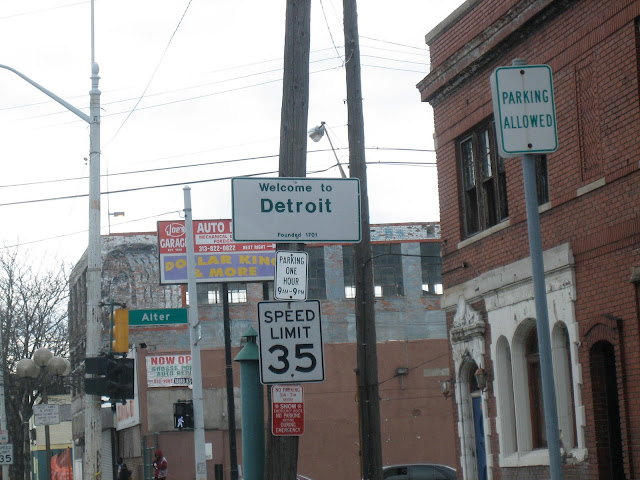
For those of you not here
here are a few pictures, more to follow
Saturday, August 16, 2008


Monday, August 11, 2008
On Disparities and Health
We had a lecture today from one Dr. Flack, a very interesting man whose lectures I always enjoy. The topic was health disparities, specifically disputing a number of common assumptions.
1. For example "There are health disparities between races." In reality the genetic differences between races are minor. The reason African Americans and Hispanics appear to be disadvantaged is that they are disproportionately poor. Now that in and of itself is a result of disparities in economic opportunity...but African Americans are not inherently unhealthier than other groups.
2. "The United States spends the most on Health Care but still lags most other developed countries in Health Status." There is a false assumption here: the medical establishment can create good health in a population. The truth is, most diseases of high prevalence in the developed world are dependent on choices made by individuals years before the disease presents itself. The fact that Americans choose to live unhealthy lifestyles leads to the poor results on international surveys. Spending more money won't fix that.
As Americans we have gotten used to the idea that you can buy your way into anything. But in medicine there is a limit. The only way to improve health generally is to convince people to live healthier lifestyles.
There is one group of people, however who are consistently disadvantaged when it comes to medical care...the poor. They live disproportionately in cites, where access to fresh fruits and vegetables is limited, and fast food abounds. Where it isn't safe to be outside at night, the only time many people could exercise. They have less access to education, they drop out more (educational attainment is the single biggest determinant of health status) And there are fewer medical clinics and hospitals to serve the populations of urban poor. Consistently underserved.
Sunday, August 10, 2008
back in the game
As anyone who has checked this blog in the last month will recognize, there is a post dated July fourth that was never there. This is one big reason I haven't posted in so long. I wasn't sure if I should post this and it kind of got stuck in the pipeline blocking up my flow of ideas. But I guess I should put it out there. At first I thought it might offend people. And it might. Then I thought, well it's been a while...and so it has. Then I thought, I'll think of something else, but nothing came. So today I edited it for readability...which doesn't mean it's readable. but there you have it.
I've also added a small post to go along with the other
I've also added a small post to go along with the other
On nationality
So Steven wrote some time ago about the experience of being an American in Russia (which would probably be a bit more tense now than it was just a few months ago).
He wrote "So then, I told her, what separates us? Legal fictions, Bokononian categories that hinder intimacy. We have said, and shall always say, that we who know Jesus have more in common with an Iraqi Christian than with an American non-Christian. We must come at others with these two categories in mind only, no supremacy, no victory. Just those IN CHRIST who will fellowship on that level."
I think Steven, that you are correct. When I first began to travel, I found myself often trying to defend the actions of the United States. Now that I understand that I have more incommon with a Christian from any country than an American who isn't a Christian, I can say..."I don't agree with that." And I can claim my citizenship in the kingdom of heaven to say, "the false reality you call 'the United States' does not define what I think or do and is not a real pert of my identity in Christ."
Anyway...I've said enough
Friday, July 04, 2008
Independance Day
A couple years ago, the fourth of July fell close to a Sunday. Adrienne and I went to a church in Tucson we had been told was deficient in preaching and music, but had great fellowship (we went four times and no one even acknowledged our existence). The whole service was geared towards the celebration of the fourth of July. We sang God Bless America, and America the Beautiful...the sermon was about how God has blessed this great country...
At Willow Creek there is an American flag displayed outside the sanctuary. Willow Creek is notorious for, among other things, not allowing any crosses to be put up in the church for fear they might offend new visitors.
Over the last 30 years, the church in the United States has become identified with one particular political party, and has become increasingly vocal in its acts of patriotism. Many church leaders have even been known to advocate war to defend and advance the causes of this particular nation.
If you don't believe me, check this out www.bushfish.org (I don't know how to turn this into a link or I would.) (Also if you have a weak stomach don't go to the site)
In Rome, the state was held together, in part by the cult of the emperor and by faith in and loyalty to the state apparatus. When the new Christian faith began to spread its members were denounced as atheists, as disloyal, as unpatriotic. And they responded by saying, "We have a new emperor now, who demands our allegiance, and we are faithful to him." Paul said to the new believers "Our struggle is against the rulers, against the authorities, against the powers of this dark world," as well as "the spiritual forces for evil." John, exiled for his lack of faith in Domatian, wrote of Rome as the whore, Babylon, and called the church to be faithful unto death, to Christ.
Rome brought peace and prosperity to the lands it conquered (as well as, at least initially a lot of death and despair). It spread the rule of law across a wide swath of territory. Rome defended itself with its powerful army, and it fought preemptive wars to head off potential threats on the fringes of its empire. Rome was a place of great technological advance and innovation, of great buildings, and large cities. Rome was a place the gods had blessed...until it fell collapsed upon itself, crushed by its own weight, its carcass picked clean by barbarian invaders.
If you replaced "Rome" with "United States" in that paragraph it would still be true...well the last bit is still ahead of us. And I think that everything that the New Testament says about Rome is true of the United States. We are not called to be loyal to the government. We are not called to be loyal to a nation.
Don't get me wrong...I'm happy to live in the United States...most of the time. In a lot of ways it is a better place to live than, say, Haiti. In fact very few people would choose Haiti over the United States.
But I think that a lot of the time the church in the United States forgets that even if you live in the best, most comfortable Babylon on Earth...She's still a whoring seductress that we are called to struggle against, to stand up to, to not pledge our allegiance to.
My loyalty is to Christ and to the church. My hope and my faith are found in the redemptive power of the cross. Not the power of the US military. So when the United States decides to go to war, I don't have any responsibility to support that...on the contrary, I have a duty to stand with Christians in Iraq (or anywhere else our government sees fit to attack) and say stop.
When I was younger than I am now, I accepted the idea that war could accomplish good. I accepted the idea that I should be loyal to my country. That supporting one country over another was permissible. I gloried in the history of the United States military. I devoured the history books, watching for examples of American valor and heroism. I looked up and saw a government to be proud of. Now I see a tale of death and destruction. I see a government to be ignored and when necessary resisted. What happened?
So fireworks are fun. So are barbecues. I think I'll try to have both.
Saturday, June 21, 2008
A zoom with a view--pictures from the road

Here is a typical small settlement in the biggest arable region in Haiti--the valley that contains Dessallines. The view from the road is dotted with these little mini settlements where people who grow rice on state-owned land live. The houses are made of mud held together with the occasional rock, and sticks, and generally a metal roof. A few of the houses are made out of cement blocks(for obvious reasons, this is considered an upgrade).

Farming is a relatively simple (though incredibly arduous) affair. Hand tools are the rule, though emaciated livestock do lend a hand. (I love it when I can start and end a sentence on the same word). I did see a few rusty tractors stuck in the mud. The farmers here don't have the means to purchase farming equipment (in fact a lot of their hand tools are hand tooled). But even if they did, they're not farming their own land so there's little incentive, and even if they had the means and the incentive, most of them have no education (by "no education" I don't mean they dropped out of high school--I mean it literally), the only thing they know about farming is what they are doing.

This lady is protesting. The road was blocked by people walking in the road waving branches (or leaves, the branches cooked last night's non-supper). Protests are becoming more common in Haiti (well there's kind of an ebb and flow to the cycle of protests--over the last six months the pendulum has been swinging up). About a month before I went all of the windows up and down Delmar--one of the main roads in Port au Prince--were broken by protesters upset by the price of food.
This woman and those with her were upset about the price of fertilizer. A year ago a bag cost $200 Haitian, Now it costs 600. The land these farmers farm is state owned--they get paid a set amount of money for the rice they grow. this is how the government can make money selling rice even when the price of raw materials goes up--they pass the cost onto the farmers.
The government sells the rice on the global market because it can make more money...then cheaper rice (less filling is the description I got) is imported and taxed so it costs the average Haitian more than they got paid for the better rice they grew in their own fields (or state owned fields).
Just for comparisons sake

This is a house up on the mountain overlooking Port au Prince--where the upper class lives. Lifestyles of the rich and famous. ok, probably not famous.
Ok, maybe that's a little shocking, you might ask--how could they live like that, while those in the valley suffer?
But think about this--the difference between the poor and the rich is even greater in the US. The poor here just aren't as shocking--maybe we're just used to them.
Shoot--why criticize the rich--here's where I live. How can I possibly talk about poverty?

I know that I've said a lot of things on this blog about poverty and how hard people in Haiti have it...to tell you the truth, more often than not I feel like a failure, a hypocrite, and snakeoil salesman. I want you to be moved by the pictures, by my words...but I sit here, typing on a computer in a climate controlled room, stuff, stuff, stuff...all around, invading my life, suffocating me, killing possibility...
"Again I tell you, it is easier for a camel to go through the eye of a needle than for a rich man to enter the kingdom of God"
Wednesday, June 18, 2008
PS
I am back and healthy and Adrienne and I are heading out for a little retreat. 17 days is a long time to be apart.
Back in a few
Back in a few
Forget John Owen
Rich Mullins once said at a Wheaton College Chapel service
"You guys are all into that born again thing, which is great. We do need to be born again, since Jesus said that to a guy named Nicodemus. But if you tell me I have to be born again to enter the kingdom of God, I can tell you that you have to sell everything you have and give it to the poor, because Jesus said that to one guy too...
...But I guess that's why God invented highlighters, so we can highlight the parts we like and ignore the rest."
Friday, June 13, 2008
dead babies and other assorted travesties
Today a woman came into the hospital. She was in severe pain, but noone is really sure what the cause is.
The hospital here is very effective at treating common ailments, and at doing realatively simple procedures. But, for anything less common, it is very difficult. There are a lot of reasons for that, which I hope to discuss later...
So there's not a lot that can be done for the woman. She can go to Port au Prince, where they might be able to figure it out...except she probably can't go to Port au Prince because that costs money...which she doesn't have. Either she'll get better or she won't.
It gets even more complicated though...she recently had a baby. During her pregnancy she had eclampsia, and she ended up having a C-section. The baby got sick and died twelve days ago. Infant mortality (every type of mortality...and morbidity for that matter) is high here. Malaria is deadly...90 percent of its victims are under five. Diahrrea is deadly (unless you rehydrate with electrolyte solution--which costs all of 10 cents a day or so for a child). Malnutrition is deadly...walking in the street is deadly...machetes are lethal...In short, the deck is stacked against children. We forget this, because we have put up walls around our children.
And a furthur complication...she doesn't know the baby is dead yet. Her family hasn't told her...they told her they sent the baby to a hospital in Port au Prince. This too is apparently not all that uncommon. They can't figure out how to tell her...and how exactly do you tell a woman that her child is dead?
Wednesday, June 11, 2008
Hip Hip Hoorah
ADRIENNE
I just want to say "I love you"
Happy Anniversary
Three years and counting
EVERYONE ELSE
sorry for the mush
but it's my blog
and I can say whatever I want.
I just want to say "I love you"
Happy Anniversary
Three years and counting
EVERYONE ELSE
sorry for the mush
but it's my blog
and I can say whatever I want.
Tuesday, June 10, 2008
Don't read this post
SERIOUSLY
IF YOU GET NIGHTMARES IT'S NOT MY FAULT
Yesterday a girl came into the hospital with her father. She had recently given birth. She presented with sever burns on the inside of her legs up to her buttocks. The wounds were infected.
One of the folk medicine beliefs here is that after giving birth a woman has to be cleansed. The method for this is to sit over a pot of boiling water and let the vapors purify you. So an older woman in this girls family made her do this. They held her over the fire...she must have been screaming and squirming...there's no way she could have just sat there. They held her there until her skin burned off. Then to bandage the wound they mixed ashes with water to make a paste and spread it on.
She didn't give birth in the hospital because they live a long ways away and couldn't afford it. Finally her father brought her in. Turns out her baby wa sick too. It wasn't getting adequate nourishment because her body was under such stress.
I WARNED YOU
Saturday, June 07, 2008
Some things to think about
The standard measurement of rice in the market is a small can that holds about two cups. It currently sells for 6 Haitian dollars or slightly less than what more than half of Haitians live on...one US dollar. According to the bag that rice comes in in the US that's eight servings and 1020 calories. No vitamins. (except the ones in rice) a small amount of protein.
So if you made an average amount of money and spent all of it on rice you would still be undernourished and malnourished and you couldn't support your children or wife.
That's why everywhere you go are small gardens. I climbed up to the forts with the medical director of the hospital today. It took about three hours to get up there. We left at five. On our way back down we came a different way through a valley (ok not a valley...cleft in the mountain) that gets enough rain and has enough soil to support (or at least tolerate) crops. We were still a couple hours walking from town when the gardens began. People farming small plots with corn, or beans, lower down there were a few banana trees. In some places mango trees(mango trees would be a good investment...except that they all ripen at the same time so everybody's out selling rotting mangos on the streets together).
Cooking rice without gas, electricity or wood is difficult....so you have to buy charcoal...or go cut your own wood...except there isn't any wood. The only place where we saw any wood was up at the very top of the mountain...and even there the trees were stumps with twigs growing out of them. Every branch that could be cut with a machete had been cut. And there was a guy up there with his machete, cutting away at the twigs that had grown up since the last time he was there.
So you've got rice...and wood to cook it...toasted rice, yum. Or you can go get water. So you take a five gallon bucket, or whatever container you have and walk to the spring. You pump your water and walk back. If there isn't any rain you're going to have to carry that five gallon bucket full straight up the mountain to water your little patch of ground. There were people doing this. (and when I say straight up I mean it...when all of your time is spent trying to survive you don't have time for switchbacks)
If you're still reading...which I recognize most of you aren't....think about this.
The price of food in Haiti has gone up, just like it has in he US. But unlike the US where food costs consume around 9 percent of our budget, in Haiti food takes up almost the whole budget. So what do you get rid of to pay for food, when food was all you were buying in the first place.
Schools run by churches used to feed children hot meals five days a week. Now most are down to two days a week...a few still do three days. Except the meal is smaller than it used to be, no meat, no vegetables...rice and beans. (and not very many beans)
Thursday, June 05, 2008
bugs and bugs
So last night I was sitting up reading a little. My light was on...I looked up and there were 40+ species of insect in bed with me...literally, I counted as well as I could. They ranged from a couple inches to barely visible. And I have screens on all my windows. Imagine life without screens.
Today was really my first full day at the hospital...I knew that there are a lot of diseases in Haiti that really don't exist anymore in other places. I just didn't realize how prevelant they are. I only saw around ten patients and I saw two cases of malaria, one of typhoid, one of TB, and another of scabies. One of the malaria cases was a 14 month old little girl. She ended up staying in the hospital.
Today was really my first full day at the hospital...I knew that there are a lot of diseases in Haiti that really don't exist anymore in other places. I just didn't realize how prevelant they are. I only saw around ten patients and I saw two cases of malaria, one of typhoid, one of TB, and another of scabies. One of the malaria cases was a 14 month old little girl. She ended up staying in the hospital.
Wednesday, June 04, 2008
hospital time
Today was a slow day at the hospital apparently. Could have fooled me...can't wait to see it on a busy day.
I was able to communicate with a number of the doctors. Apparently under Aristide the goverment started handing out scholarships to study medicine in Cuba....which is good since Cuba trains pretty good doctors. So a few of the doctors at the hospital speak Spanish well. so I talked in Spanish more than English and Creole combined today.
the biggest business at the hospital is the maternity ward. Haiti has a high birth rate and a high infant mortality rate. Because of the lack of prenatal care eclampsia (that's what preelcampsia becomes if left untreated--pretty rare in the US) is a major problem. The have a whole room of beds devoted to it.
Judging how busy the hospital is difficult because every admited patient brings at least one guest to take care of them, prepare their food etc. This keeps prices down, but increases crowdedness.
peace
Tuesday, June 03, 2008
National Highway 1
Today we drove to Desallines--the first capital of Haiti. On the mountain that stretches above it there is a series of five forts built to watch for the return of Napoleans troops.
Most of our journey was along National Highway 1 which connects the two biggest cities--Port au Prince and Cape Hatien. It's about one and a half lanes, with no markings, and often no road. Four-wheel drive is a virtual neccessity to navigate certain stretches. Potholes that could swallow your car abound. Piles of garbage line the road outside cities. One famous thing about Haiti is its lack of trees. This country has attained the unique distinction of 98 percent deforestation. And there's not much hope for reforestation. Charcoal is the main fuel for most people--gas is prohibitively expensive to the 65-70 percent of Hatians who live on less than one dollar a day. Of course lots of other things are prohibitively expensive...meat...shelter not made out of dried mud...medicine...etc (it's a long list)
Two stories.
We stopped to talk to the gentlemen who work at a sawmill along the road...They had a huge log (maybe 8' long, 18" in diameter) up on some tall (7-8') homemade sawhorses. One guy was standing on the log, the other guy underneath and they were cutting the log into 8-10 boards with a two person saw. Push Pull, Push Pull. They said it took them about half a day to do each log.
We also stopped to talk to a woman who works in the construction business. Rocks, sticks and mud are the main materials for house construction. Cement blocks for the wealthy. Her job was to break up big rocks into little rocks of varying sizes to use un mud walls or cement mixing for roads. Essentially her job was to make gravel out of boulders....her tool? a hammer. All day, sitting on a pile of rocks banging at them with a hammer.
Subscribe to:
Posts (Atom)