Enough has been said about the places that are obvious choices for all of us (the cottage, Rancho Betainia) so I will attempt to bring some fresh places into the discussion rather than repeating what others have said.
These are all places that I associate with very happy memories and which I have enjoyed.
Oxford--If given the choice I would gladly have spent the entirety of my college experience there.
Mexico City--particularly the area around the insurgentes subway stop. Lots of things to see and do, plenty of coffee shops and chapultapec nearby
Michigan in the fall--this year for the first time in 14 years I will see the leaves change.
Saturday, April 07, 2007


Wednesday, April 04, 2007
On Transition
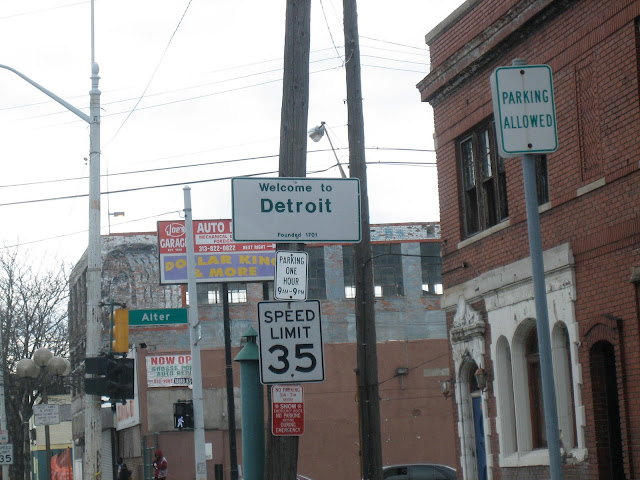
I did not get into the U of A. So next year Adrienne and I will be living in Detroit. Pray for us as we go through a difficult time.
Saturday, March 31, 2007
On language
"The nuts and bolts of the European union are hardly riveting, but a basic knowledge of its institutions are essential to understanding how it works." The Economist
Did you catch it?
This is why I enjoy the Economist. It's so subtle, it makes perfect sense without full understanding. I often find myself laughing outloud as I read it. the way the editors manage to turn words in a way that seems perfectly natural so that you are often left wondering...was that intentional? National Review occassionally has a clever play on words in its opening section. They are humorous, but bald.
I'm not sure I've ever read another magazine on current events that even attempted a joke.
Friday, March 30, 2007
On brackets
I made out a bracket on ESPN.com this year. A friend sent me an invitation so I filled a few out. I am reminded again why I don't fill out brackets.
I am an intensely competitive person. Games of all sorts require of me a rigid self-control. If I play a ball game I have to forget the score. If I play with the sort of person who repeats it after every play the ruthlessness emerges from its lair. It is a force of nature which I have fought for years to bury and to kill. Board games are a bit different. It's harder to forget who's winning. When I play a board game one of three things generally happens. Sometimes I give up and enjoy the game. This is a victory for me though I generally lose. More often I try to win. Either I do win, in which case the victory is hollow, leading only to the desire to win again; or I lose, in which case I get this terrible sinking feeling in the pit of my stomach. This leads me to be unbearable around as you all well know. I become a surly wreck. Well everyone who is likely to read this blog has seen that so I won't explain further.
Which leads me to brackets. One of the joys of the tournament for me is rooting for the underdog. I would love nothing more than to see a 16 seed take out a 1 seed someday. But my competitive nature impels me to fill out a bracket as I think the tournament will actually turn out, not as I hope it will. I just can't fill out a bracket with four 16 seeds in the final four. I also want my bracket to win. Which means that when the games are going on I find myself actually rooting for the higher seeds. And so I can't root for the underdog, and the one thing that makes the tournament enjoyable for me.
So next year no brackets. Until next year by which time I will have inevitably forgoten the lesson I learned this year.
Thursday, March 15, 2007
And the Ides Have It
Happy Ides of March Julius Caesar. I hope that all of my loyal readers (all 4 of you) are luckier today than he was on his last Ides.
Friday, March 09, 2007
On Beethoven
I'm listening to John Eliot Gardiners renditionof the third symphony. This, I have conluded over the last few years is my favorite Beethoven symphony.
Tuesday, March 06, 2007
A Review: The Bonfire of the Vanities
It's ironic that Steven used this as a post title; I had this post ready to go and it somehow got deleted about a week ago.
Suffering is a basic element of human existence. We do our best to ignore it when we can, and we try to avoid it when we can no longer deny it. It is generally only the truly desparate or introspective who recognize its place in our lives. It is a deep and strong psychological force, even when we refuse to recognize its existence. Most of the vices of men are sought, at least in part, in an effort to alleviate this suffering: avarice, gluttony, envy, lust, pride, even anger is a response to perceived injustice. Suffering has been a basic component of the human condition since the arrival of sin in the world. Our separation from God entails suffering. Even in the post Christ age we still inhabit a fallen world.
Tom Wolfe's work rests on the recognition of this fact. In each of his works that I have read the main character begins the story in the flight from suffering. Over the course of the novel, they are slowly forced to recognize its existence and eventually embrace it as a fundamental piece of their identity and existence. This storyline lends itself to incredibly moving tales when woven by the master storyteller that Wolfe is.
The Bonfire of the vanities is no different. It is divided roughly into thirds: a comedy of errors in which McCoy goes to ever increasing lengths to protect the myth of his own greatness; the tragic and methodical unravelling of the web of lies he has surrounded himself with; and a heroic tale of of his struggle to reconcile himself to reality and at the same time stand up and fight. He undergoes a fascinating transformation from a weak--though emminently successful--disembler, into a strong--though eminently unsuccessful--human being with a firmer grasp on the reality of life.
The story is a tale of facades, some crumbling, some rising some to protect from the self, some to protect from the outside, but all ultimately designed to shield ourselves from the recognition that suffering exists.
Friday, February 16, 2007
On "nonessential theology"
I think that this statement needs a little clearing up, because Steven is right that it doesn't come off quite right in the previous blog.
Let me be clear: I think that there is a right answer to every theological question. I don't think the God of the Bible comes across as a do it yourself kind of God. But I also know that we are deeply flawed beings who are rarely entirely correct on anything. We are the almost-there-people, the I-think-I-know's. In the flesh we are incapable of fully understanding God or our relationship with him. We are called to serve , follow and trust that he will reveal himself to us. If we keep this in mind, we can recognize that there will never be the kind of uniformity-of-thought that appeals so much to the logical mind. Our beliefs are in part a result of our personal, family, and community history, so theology is a very diverse field. I think this is okay, not because I think that all of these ideas might be right--clearly they cannot all be right--but because I can recognize my own inability to say authoritatively that I know.
So I think that discussion and argument are good. And I think that we need to continue to search after the one truth--God. Christ said he was the way the truth and the life. In seeking him we seek truth.
So this is where we come to my--perhaps artificial distinction between essential and nonessential theology. I think that there is a certain corpus of thought (I think the Nicene Creed is a good place to start) based on the Bible which is essential to Christianity. I also think that there are a lot of grey areas where uncertainty looms. This is the realm of thought, discussion and debate. But in this realm, even if we disagree we can recognize the Christian-ness of the other.
In this I follow Augustine who said--"In essentials unity, in nonessentials liberty, and in everything charity."
Thursday, February 15, 2007
On Church
I started thinking about Mark's questions in his post the other day. So here are my thoughts on church and worship(half-formed and dimwitted perhaps):
Somehow in our culture there has been a profound shift in the way we view church. We often see it as a place we go. Church has become identified with a location and an experience. For many in our culture, church is nothing more than a worship service. I don't think this is a Biblical model.
The church should instead be seen as something we are a part of. It is us. We are the church. The building isn't the church, the service isn't the church, we shouldn't "go to church". In the Biblical model as I see it, the church is the Body of Christ, it is the community of Christ followers. When we see church this way I think, worship and worship style become a lot less of a problem. We gather together as a Body to worship corporately, but that is not the full extent of our involvement in the Body. We gather together in each other's homes, at Starbucks, at work, in the park...in everything we are the church. It is in this sense that Christ becomes our identity.
It is through obedience in this that we truly worship God. Jesus didn't laud the sheep and blast the goats for their synagogue attendance. He applauded and chided them for their attitude towards the downtrodden and oppressed. He called us to seek the will of God in everything, not just how many guitars are appropriate on Sunday morning. If we truly seek community in Christ, and seek his will in everything, then we see the divisions within the church faling away, and Sunday morning fading to an important, but not central event in our lives.
If we see church this way I think that denomination becomes less important. There are two senses in which the body of Christ is a community. The first, essential for success in the other, is local. I am a part of a certain body of believers. We gather together on Sundays and during the week and form a small tight-knit community with overlapping bonds that hold us together. The worship service and nonessential theology of our church is a reflection of our own unique backgrouds, callings and relationships.
The second, also very important, is global. In this manner I am linked to every Christian in the world. It is important to remember this and to reach out in love to other Christians. But it is important to remember that we don't worship corporately or discuss theology with all of them. Every part of the Body has its own mix of style and substance. But that is not a concern of mine. I am not called to conform hem to my image, I am called to love and live in brotherly harmony.
That said I think that there are a few basics--essential philosophy. I personally think the Nicene creed is the best explanation of what is essential to the Christian faith. Beyond that, I think there is a wide degree of latitude in what is Christian. This is something I learned from the Eastern Orthodox Church.
To sum up I think that worrying about denomination is less important than we often think, and that nondenominational is a positive movement. As long as it is accompanied by a strong commitment to community and a reaching out to the global chruch, it is a recognition that denomination is a relic of a word.
Tuesday, February 13, 2007
On the mind
It's weird how the mind works.
I don't really spend any conscious time worrying about getting into medical school, at least I haven't yet, though I can feel that time drawing closer.
But it still weighs on my mind. At least I think that's what it is. Lately I just don't seem to be myself. My mind isn't functioning properly. Part of it is that a large part of my mental ability and especially endurance goes into school every day. The mental agility required to keep up with roomful of curious 10 year olds is suprising.
But there's something else, and it has grown stronger and stronger as the time approaches. Having not heard in January I became a bit apprehensive, but over the last two weeks as the middle of February approaches I have begun to doubt myself. The "If I get in"'s have snuck their way back into conversation without anyone noticing. I feel like it saps my mental energy. Maybe I'm just a wimp. Plus we've had people over for dinner every night for the last week. I know that saps my energy.
Thursday, February 01, 2007
On time
As I read through my last post I was reminded of a Seinfeld episode where Kramer decides he's only going to sleep for 20 minutes every three hours so that he can have all sorts of extra time to get stuff done. Besides the obvious getting incredibly tired and falling asleep everywhere (he stops the program after he wakes up in a bag in the Hudson river if I recall) he finds that he is incredibly bored. He wakes Seinfeld up at four in the morning because he can't think of anything else to do.
I have often said that I wish that I could operate on a 30 hour day while everybody else was on a 24 hour day so that I would have more time to do things and not be so stressed out. True I would probably still manage to fill most of my time, but perhaps with an extra few hours every day I would be able to find more time to relax intentionally. I try to set aside time daily and weekly to relax without the distractions of life, but I rarely have as much time as I would like.
I have long argued for a simpler life (and lived a very busy one). Setting out my daily schedule like this helps me to see how much of my time is used up by certain things. I try to cut things out, but right now looking at the schedule I can't find anything that I would willingly cut. Even on the weekends, the only thing I would cut if I was secure about going to medical school next year and not having to apply again is the volunteering.
So my question is, how do you simplify your life, apart from quitting your job (not really an option at this point)? My time is used in five main ways: the two biggest are sleep and work, neither of which is cuttable. I've completely given up working at home and we jet out of there as soon as school is out. The next biggest is family time--child care and time with Adrienne. If anything I would like to expand rather than cut this area. I love spending time with my wife and if it were possible I would quit our jobs and spend all day together while preschool is in session. Next is relaxation/alone time. I have to have time alone each day, preferably at the beginning and at the end to maintain my sanity and stay connected to God. Again I wish I could do more of this. The fifth is community building. Adrienne and I intentionally spend a sizeable chunk of our time with other people, having them to dinner or going over to their place. I feel like it is part of God's calling for each of us to spend time building relationships with other people (see my first few blogs on this site). And that's it. There's not really anything in my life that doesn't fit into those categories, yet I am still incredibly busy.
One thing that would help would be working closer to home. An hour in the car is an hour lost everyday, though it's not so bad since we get to ride together and enjoy each other on the ride.
I don't think I am alone in these thoughts. In conversation I have heard the same thoughts from a lot of different people. So how do we simplify our lives? And would it really make us happier?
On A Day in the Life
Everybody Else is doing it so why can't I:
5 AM alarm followed sometime in the next half-hour by the sound of feet quietly easing to the cold cold floor
Make coffee, read Bible, time permitting take dogs for walk
6 AM wake up rest of family breakfast duty with the little one, clean kitchen, make lunches
7 AM leave house, stop at preschool, continue to work. If we leave at 7 it takes 20 minute, if we leave at 7:10 (more common towards the end of the week) it takes 30. Get to work, prepare for day, make lesson plans, review material, create longer list than neccessary of things to do during the day.
8 AM begin school--generally with boardwork and oral review, then on to writing. We do a new writing activity twice a week with the other days given to editing and reading.
10:30 AM Break--generally spent teaching students who have fallen behind between mouthfuls of my snack (bran muffin and an orange)
10:50 Back to class for Math. Generally I make this section up as I go along, teaching whatever the students are struggling with.
1:00 Lunch Spent the same way as break (Peanut Butter and Jelly, an apple or peach, chips and a Diet Coke for lunch)
1:45 Back to work for Vocabulary, Geography, and whatever else I came up with in the morning--sometimes reading comprehension or a spelling bee or some sort of boardwork)
3:00 PE--at last teaching is done and I can have some fun with the kids before they go home
3:30--schools out and we try to hurry home. A delay of 20 minutes in getting out of school can mean an extra half hour on the road
4:30-5 PM get home prepare dinner, check e-mail and blog, pick up house, take a walk (not always)
This part of the day is highly variable--Tuesdays we go to the Seneca house, Wednesdays we get home after six due to the teachers meeting, Thursdays and Fridays we generally have people over or have some other activity.
6 PM dinner
7 PM bathtime, pjs brush teeth, read kids books (I have become a big fan of Dr. Seuss, his books are so fun to read outloud)
8PM bedtime, spend time with the wife--watch TV, read, blog, relax
9PM bedtime number two, read (by this time of the night all I'm good for are magazines and pulp fiction--my brain is fried by the mental involvement teaching requires) feed the dogs, wash the dishes, drink a cup of tea, write in my journal (this is probably the time of deepest connection to God during the day.
10:30 PM give or take a half hour: bedtime number three
Weekends
6 AM wake up to the sound of my name whispered by a face inches from mine, wake up drink coffee, take care of small child until 9 or so.
9 Saturdays work on projects around the house--painting woodworking
Sundays volunteer at hospital
12 Saturdays clean house do laundry
Sundays go shopping for weeks groceries
4 PM Saturdays go on date or have friends over
Sundays go to church
bedtime ritual largely unchanged
Tuesday, January 30, 2007
Fear this
How's this for something to fear? God says he will harden Pharoah's heart so that He can punish him so that the Israelites can see the power of God.
This is something that from time to time in my life has caused me a great deal of anguish. Here's why: It shows the sovereignty of God. He is omnipotent and he uses that power to accomplish his purpose. I have or at least feel like I have very little to say about that purpose. Take the case of Pharoah. He ran up against the will of God in the worst way and paid for it with everything he held dear and still didn't have the chance to follow God at the end. His problem wasn't in what he did, it was in who he did it to. Hundreds of Pharoahs acted in a similar manner and didn't receive any temporal punishment. Instead they got to live a life of luxury and build impressive monuments to themselves on the backs of other groups of people who weren't the chosen of God.
This Pharoah ran up against God's chosen people at the particular time God had chosen to call them and give them a sign of his faithfulness. So the question that inevitably rises in my mind is why this Pharoah at this particular time. The same question arises--why Jacob and not Esau? or why Abraham and not some other nomad wandering out in the desert? or why Isaac and not Ishmael? None of these questions seems to have an answer that can be answered by human understanding. Why are some called by God and some not? According to this passage and others--because they fit his purpose.
This is not a critique of God--just an openly asked question. Why are some chosen for punishment? and if Pharoah, why not me?
Monday, January 29, 2007
A Review: Babel
What do an ageing illegal immigrant in the US, a couple vacationing in Morroco whose marriage is on the rocks, a teenage shepard in the morroccan desert and a deaf Japanese girl stuggling with daddy issues have in common? Not much apparantly.
That's about it for the movie.
On to the movie theatre. Why do we continue to patronize them?
Here's my summary of a trip to the theater. First, it has an 18 dollar entrance fee for a couple makes it just about the most expensive date possible, even with a relatively inexpensive meal beforehand. Then you are crammed into room with hundreds of strangers. Airplanes excepted it is probably the most crowded place you are likely to experience in contemporary American life. Even with stadium seating and the bigger modern seats you cannot escape the stifling crowdedness of the place. As you walk in the popcorn crunches and the soda sticks underfoot.
Then you're stuck. The seat even if comparably comfortable quickly annoys. It doesn't recline and there's nowhere to put your feet. You can barely change position without disturbing someone--not that there is any reasonable way to change position. And you can forget about going to the bathroom. Not only will you upset everyone between you and the aisle, but you can bet that they'd all be upset if you asked them to pause the movie for you.
In addition to all this you have to be quiet. I can't talk to my wife about the movie as it's happening, and I can't laugh when I find things funny unless the filmaker intended them to be so (which is why I didn't watch An Inconvenient Truth in the theater). I got caught a couple times during Babel and got the evil eye from my wife. And if I miss something I can't rewind the movie to understand it. I just have to make up the storyline as I go.
When I compare this to watching a movie at home I conclude I must be crazy. At home it's free, comfortable, uncrowded. I can pause when I want, and even stop it for a few hours to be continued later.
SXome would say that there are movies that the theater improves, by which they mean it is louder, brighter and more likely to induce nausea. To that I say, Bah! give me a movie at home with my wife over one in the theater any day of the week.
Sunday, January 28, 2007
On fear II
So I've been thinking about this fear thing lately. It seems from my knowledge of the Bible that the phrase "fear of God" is intended to convey more than I have ever fully accepted, but less, I think, that what I have occasionally heard from others.
I think that the authors of the Bible were serious in their admonishment to fear God. And in intimate encounter human beings were undeniably afraid of God. The first such example is the case of Adam and Eve. Post-sin, they were ashamed and afraid, and so they hid from God. Moses certainly felt the fear when he spoke to the burning bush. And Isaiah's account includes its share. The one thing that all of these accounts share is a sense of insufficiency, and a recpgnition of God's role in Creation and judgement.
Judgement--a word from which our culture recoils. How often in a modern church do you hear about the judgement of God...and yet in a cursory search from memory, it is mentioned more often in the Bible than the love or mercy of God. But wait you say--Judgement is the Old Testement paradigm...the New Testement is all about the love man. I haven't researched exhaustively, but I'd bet that Judgement is a more common theme, even in the new testement. It is an inescapable part of the character of God. Ask yourself...would you really rather believe in a God that is morally neutral, or one that holds each individual to account for his actions. Should God really put me and Hitler on the same moral plane. In a certain sense of course, yes. We are both sinful wayward creations. But in another sense no. If God id truly God then He will hold Hitler to account for each of his actions.
So what does judgement have to do with fear? I'm not sure. But I think that when we truly have a firm grasp on our relationship to God and truly understand his holiness and our sinfulness then we will recognize that we have no option save to throw ourselves at his feet begging for mercy. This is I believe the beginning of the fear of the Lord. It is a constuctive fear. I am at a certain level, terrified of fire...for good reason. This fear leads me to respect its potential and to take steps to keep it from killing me. The same goes for water, cars, sharp sticks, pit bulls and God.
But doesn't this fear stop once I become a Christian and the threat of hell recedes? Perhaps not. According to the New Testement we will be held to account for our actions as God's servants. Will we be prepared for Judgement? As Paul says, if we build a house of straw we will escape on Judgement day as one escaping from flames. And according to the book of Revelation there are to books, the book of life and eht book where all our deeds are recorded. So the fear of God that stems from this recognition refines us and spurs us to greater heights.
To be continued...maybe
Tuesday, January 23, 2007
On a new technique
I tried something new tonight. I edited "On fear" as I was discussing it with a group of friends on a laptop with wireless internet...It was an interesting experience. Needless to say I stole some ideas. I may try it again.
Sunday, January 21, 2007
On a Holiday
This post would have been more meaningful if I had posted it on Monday when I wrote it. But I'll post it now in an abbreviated form anyway.
I had Monday of work. It was great. MLK Day is a great holiday for teachers, serving much the same purpose as Labor day...allowing us to ease into a new semester with an early three-day-weekend. But MLK day is a mystifying Holiday. As far as national holidays go it is unique I think. Some national holidays are pre-nation--Christmas, New Year's Day, Easter--some recognize significant events--July 4th, Veteren's Day--and some recognize groups of people--Veteren's Day, Memorial Day, Labor Day. One even recognizes a pair of individuals--Presidents Day (Washington and Lincoln). But only one, as far as I know, recognizes one person--MLK Day.. What's so special about Martin Luther King Jr.? Sure he made a significant impact on our country, but does he really deserve recognition as the only person to get his own holiday. Is he really the person who made the greatest impact on American history?
It's just an odd occasion for a holiday.
On Fear
What does it mean to be afraid of God?
"Who then is the man that fears the Lord. He will instruct him in the way chosen for him. He will spend his days in prosperity and his descendents will inherit the land. The Lord confides in those who fear him; he makes his covenant known to them."
I have often passed over references to the fear of God with a glib reminder to myself that it only really means respect or love. But what does it really mean to be afraid of God? I was struck this morning as I read this passage in Psalms. I would like some input here. What does it really mean to be afraid of God. Are you afraid of Him? If so, what does that look like?
We are quick to say that it doesn't mean to be terrified of God, but there is something terrible about God...not in a bad sense, but people tremble before God--think of Isaiah, or of Moses. When people encounter God in the Bible true terror is often the result.
I have heard many stories about people who have had very real, emotional, spiritual encounters with God and find themselves terrified.
It seems like perhaps we have lost the healthy fear of the sovereign that was common to most people in history. We have so much control over our lives that we lose sight of our own fragility. As our culture has changed we have done our best to remove or ignore the mystery of God, We turn our backs on the power of God.
Friday, January 05, 2007
A Review: The Lost City
In 1958 Cuba was held in the tightening grip of Fulgencio Batista, erstwhile democrat, reinvented as stereotypical Latin American strongman. Idiomatically as he squeezed power tighter and tighter, more and more groups began to slip through his fingers. The most famous now, though not neccessarily then was that led by Fidel Castro and Ernesto "Che" Guevarra. There were others, however. In the post WWII world on the back doorstep of the United States each of these groups sought to appeal to their bigger neighbor by speaking of democracy and pluralism. Paradoxically most also used the anti-imperial language of the day to argue against Batitsta as a stooge of the United States, propped up to ensure stability in the Carribbean in the early days of the Cold War.
In the end, Castro and Guevarra marched into Havanna on January 9, 8 days after Batista fled the country. They quickly abandoned any democratic ideal in favor of the brutal imposition of communist ideals. Guevarra was a particularly idealistic revolutionary who uickly set about reforming the economic, political and social systems. This involved lots of killing, lots of forced labor and lots of Cubans fleeing to semi-voluntary exile in New York and Miami. He was a classic example of a person who believed that the ends justify the means. He took this philosophy to its fullest extent, using the worst forms of injustice in pursuit of paridise for the people he genuinely loved.
Most literary and cinematic treatments of this period of Cuban history take one of two tracks. Either they portray Fidel and Che as idealistic revolutionaries bringing joy to the people, or they portray them as evil power grabbing monsters looking for a country to rule so they could confront the United States. Che in particular is rarely portrayed realistically.
The Lost City succeeds in presenting this period realistically to a degree I have rarely if ever seen. Batista is shown as the nasty tyrant he was, Fidel is shown as the would be tyrant he was, Che is shown as the amoral idealist he was, and the manifest failings of the communist revolution to shape a functioning society are at least alluded to.
It is the story of a nightclub owner Fico Fellove, played well by Andy Garcia, who is trying to hold together his splintering family and business through the trials of the time. One brother goes off to join Fidel in the mountains, another leads a band of would be liberators on a suicide mission to assassinate Batista in his palace. As Fidel begins to consolidate control and pressure mounts his club is shut down, his uncle killed for his tobacco plantation, his friends killed by his brother. Eventually he flees to the US to start over.
The movie is fascinating as a picture of the times, refusing to shed favorable light on any of the players, chosing instead to show it as the very difficult and trying time that it was. It is also an excellent portrait of an individual trying to make sense of the insanity of the world around us. Fico is forced out of his comfortable existence and forced to see and interact with the reality around him. It is a little slow at times, but there's a nice romantic twist and Bill Murray is funny as Fico's disillusioned friend. It is in English, which can be a bit disconcerting, but overall it is very well done.
Monday, January 01, 2007
On suffering
So it has been noted by finer minds than mine that most quality literature and in fact art deals with what most people would consider negative emotions--Fear, anger, betrayal, sadness, loss--and very little deals with things that we would actually want for ourselves--happiness, love... It has been noted that perhaps the downer side of art is more popular because it is truer to life--we do suffer, so we want to read about others doing so. This is I think at least in part valid.
But I have come across an interesting fact that may shed some light on why the darker side of life appeals more to us and why sad stories seem to move us more than happy ones.
"Most neuroscientists now recognize six basic emotions: anger, disgust, fear, joy, sadness and suprise [and a small number of] higher emotions such as embarrassment, shame, and sympathy."
Reading this list, one thing strikes me--we are hardwired to experience suffering. Perhaps this explains why even when we don't suffer we feel the compulsion to find suffering in our lives. It explains Western guilt and teenage angst. I suppose we developed this system of emotions to deal with life as it was lived by most of our ancestors. So the next time you're feeling down in the dumps, take comfort in the fact that you are feeling the suffering of thousands of generations of emotional development.
Subscribe to:
Posts (Atom)